MENU
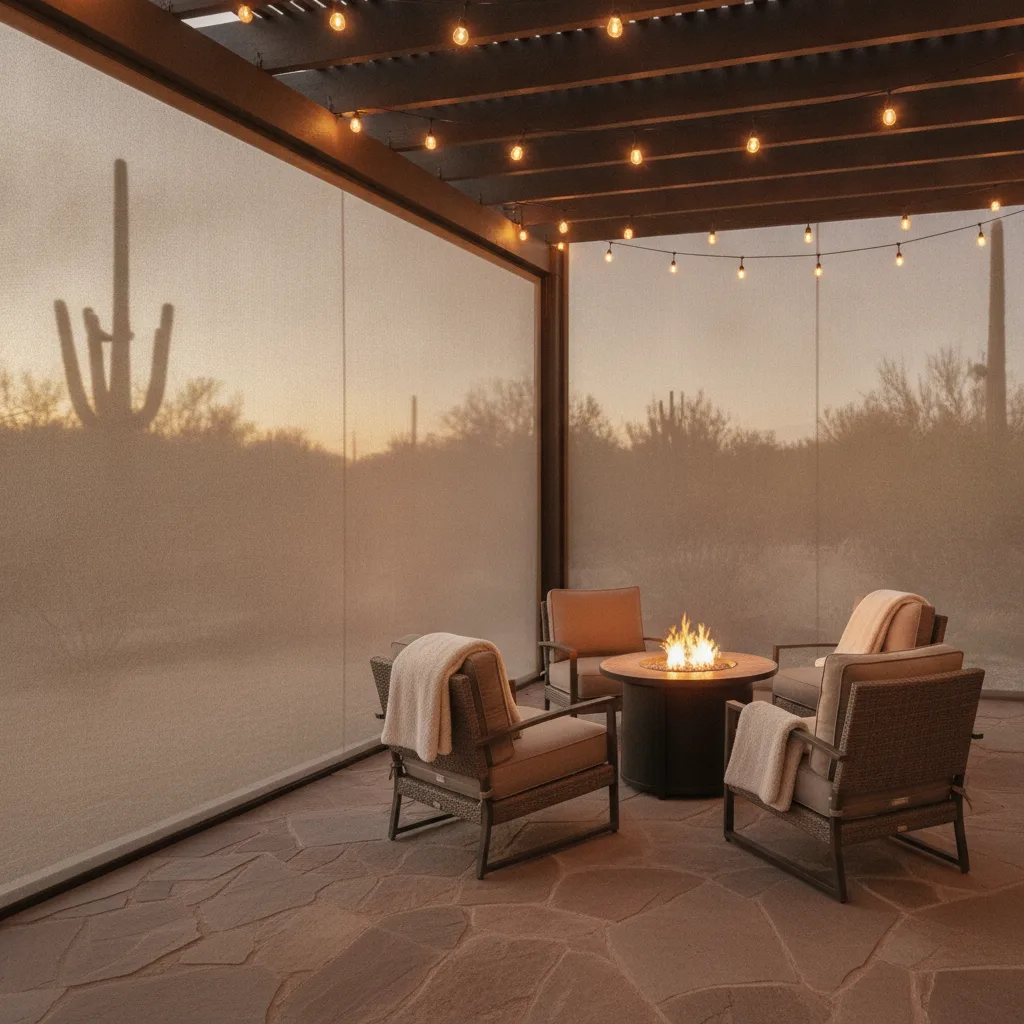
The best winter patio ideas for Tucson and Phoenix homeowners combine three elements: a retractable exterior screen to block cold north-side wind and low-angle sun glare, a fire pit as the central heat source, and layered cozy textures and twinkle lights for ambiance. TRSS Solution Screens installed on the wind-facing side trap warmth and keep the space 10–15 degrees warmer than the open air outside — turning a cold winter evening into comfortable outdoor living. Tucson sees 350+ days of sunshine per year and daytime highs of 60–75°F from November through March, so the right setup means you use your patio more in winter than indoors. Full setup takes one to two weekends; the screen installation is typically a single day by TRSS.
Tucson's winter patio season runs from November through March, with daytime highs of 60–75°F and 350+ days of sunshine per year. The problem isn't the temperature — it's two specific comfort enemies that most homeowners don't identify before they spend money: cold drafts from the north and northwest, and low-angle winter sun glare that hits south- and west-facing patios straight at eye level. Fix both and you have the best outdoor living months of the year. Miss either one and you have a patio you visit once, get uncomfortable on, and stop using. This guide walks Tucson and Phoenix homeowners through a complete six-step winter patio system: screen as the wind and glare barrier, fire pit as the heat engine, and cozy layers with twinkle lights as the finishing touches. Total setup time is one to two weekends. The screen installation is a single day. Everything else is a Saturday afternoon.
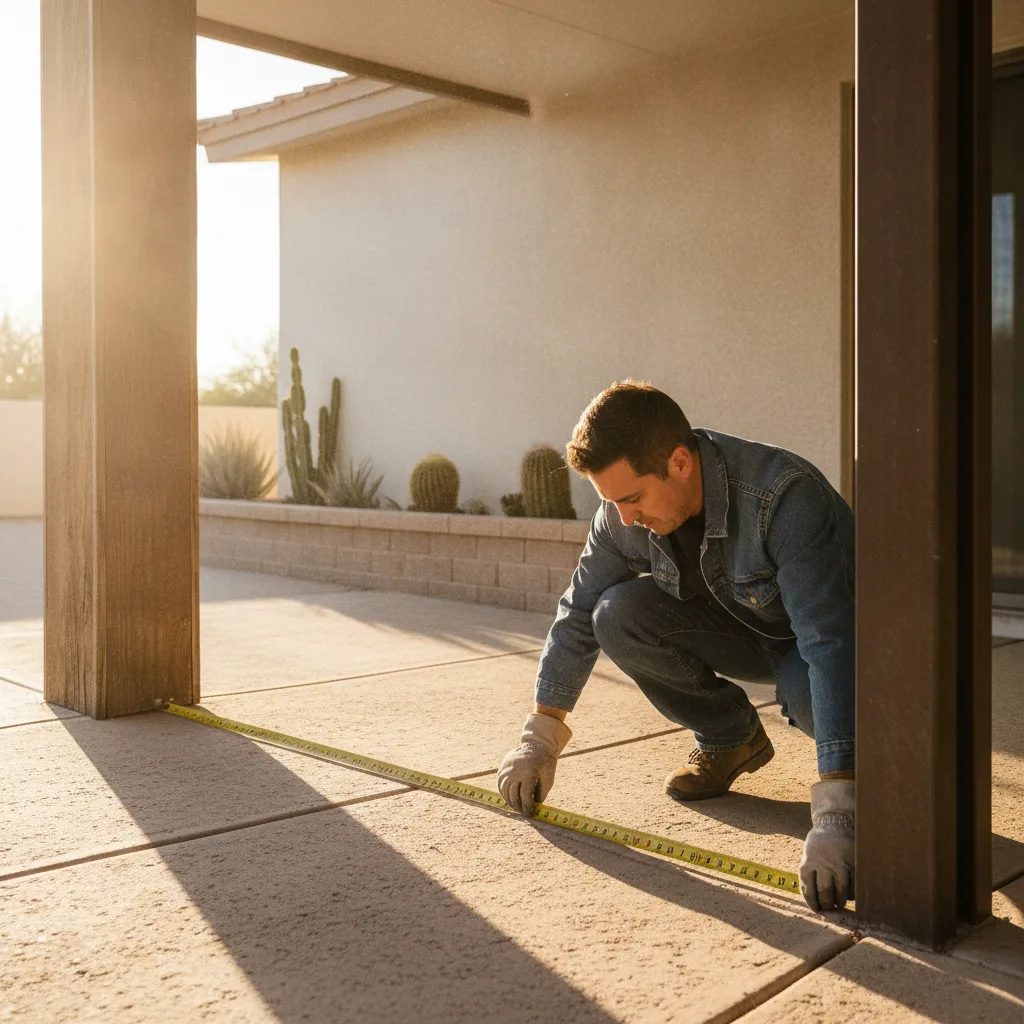
Tucson's winter patio has two distinct comfort problems, and solving both requires understanding where they come from. Cold drafts arrive from the north and northwest, stripping warmth off your outdoor space fast — even on a 65°F afternoon. At the same time, the winter sun sits low in the southern sky, sending direct low-angle light deep into south- and west-facing patios at eye level rather than overhead. That's the glare that makes it impossible to sit outside without squinting, even when the temperature is perfect.
Walk your patio at 10 a.m. and again at 4 p.m. on a clear winter day. Note which side the glare hits hardest and which direction the breeze comes from. Those two directions are where your screen placement matters most. A retractable screen dropped on the north-facing side blocks wind and keeps warmth in your outdoor space; one on the south or west side cuts the low-angle glare. Unlike a fixed wall or a permanent enclosure, a retractable solution lets you open everything back up when a warm, still afternoon rolls in — which in Tucson happens on more than 350 days a year.
This diagnostic step saves money and prevents the most common failure mode: installing shade on the wrong side, solving one problem, and still not being able to sit outside comfortably. Get this right first and every other winter patio idea you add — fire pit, twinkle lights, cozy layers, winter greenery — actually pays off. Simple touches in the right places beat expensive touches in the wrong ones.
In winter, the sun's path drops low enough that south-facing glass and open patio sides receive direct low-angle sunlight that reaches deep into the space — even past furniture placed well back from the opening. Standard overhead awnings and pergola roofs do nothing for this angle. Only a vertical drop screen or rolling shutter blocks it. This is why retractable drop screens are the correct tool for winter glare, not just summer heat.
A retractable exterior screen is the single piece that makes all other winter patio ideas work. Drop it on the wind-facing side and it traps warmth from your fire pit, turning a cold draft into a manageable breeze and keeping warm air in your outdoor space where your guests are. Drop it on the sun-facing side and it cuts low-angle winter glare while still letting daylight through. Roll it up entirely on a calm, mild afternoon and you're back to an open-air patio. No permanent wall does all three. That flexibility is the advantage retractable screens hold over every fixed solution.
TRSS Solution Screens are manufactured in Tucson specifically for desert conditions. Mermet fabric at a 5% openness factor blocks 95% of solar heat and UV rays while keeping outward visibility clear — useful when you want to watch the yard or enjoy the view without squinting. Drop to a 3% openness factor (Mermet Natte 4503) and you're at 97% heat and UV protection with even less glare through the screen. When deployed, Solution Screens keep the enclosed space 10–15 degrees warmer than the ambient outdoor air outside — a meaningful difference when temperature drops into the mid-40s on a Tucson winter night. That warmth retention, combined with a fire pit, creates a microclimate worth staying in.
For large ramadas, covered pools, or open pergola bays, the TRSS s7 Solution Screen covers openings up to 32 feet wide and 20 feet tall in a single screen — no center post required. The patented Tucson Adjustable Bottom Bar (TABB) automatically adjusts to sloped or uneven patio floors, sealing the bottom gap against cold drafts, dust, and pests on openings up to 17 feet wide. Tucson Signature Series Motors carry a lifetime warranty; Mermet fabrics carry a 10-year no-fade warranty. That's a system built to last well past the first winter season — and through spring, summer, and fall as conditions change.
Starting ~$1,500–$3,500 installed per opening
Manufactured in Tucson for desert conditions; covers openings up to 32 ft wide; lifetime motor warranty and 10-year fabric warranty; motorized models integrate with Alexa, Google Home, and Bond Bridge Pro
~$99
Links your motorized Solution Screen to Amazon Echo or Google Home so you can raise or lower screens by voice without leaving your patio chair
Darker screen fabrics absorb more radiant heat and give you a clearer outward view with less glare — a practical advantage on a south-facing winter patio. Lighter fabrics reflect more heat, which is the right call for summer-facing exposures where you want to reject heat rather than retain it. A TRSS estimator can walk you through the tradeoffs for your specific orientation at no cost during your free in-home estimate.
A fire pit raises patio usage by up to 60% in the colder months, according to industry studies — and in Tucson, that increase is easy to believe when daytime highs sit between 60–75°F and evenings dip to the low-to-mid 40s. The fire pit is your heat engine. The retractable screen is the shelter that keeps that heat where your guests are instead of letting it blow away in the wind. Together they create a system; separately, neither one fully solves the problem.
Position the fire pit at the center of your seating area with outdoor furniture arranged 3–4 feet from the flames. That distance is close enough to feel the radiant warmth but far enough to stay comfortable and safe. Point the backs of your chairs toward the prevailing north or northwest wind — so guests face the fire with the wind at their backs — then drop the Solution Screen on that windward side to seal the space. The combination of radiant fire heat and a wind-blocking screen creates a microclimate that feels 15–20 degrees warmer than the open air outside the patio walls.
Portable propane fire pits in the $150–$500 range work well for renters or anyone who wants flexibility. A built-in natural gas fire feature ($1,500–$4,000 installed) is cleaner, lower-maintenance, and adds lasting value to the property. Wood-burning fire bowls cost the least upfront but require a consistent wood supply and produce more smoke — a real concern if your retractable screen is deployed and enclosing the space. Propane or natural gas is the cleaner, more practical choice for a screened patio used regularly through the winter season.
A fire pit alone won't keep a fully open patio warm — the heat dissipates too fast in moving air. A screen alone makes the space comfortable on cool days but can't replace active heat after sunset. Together, they extend usable evening hours by two to three hours on a typical Tucson winter night. Think of the screen as the walls and the fire pit as the furnace.
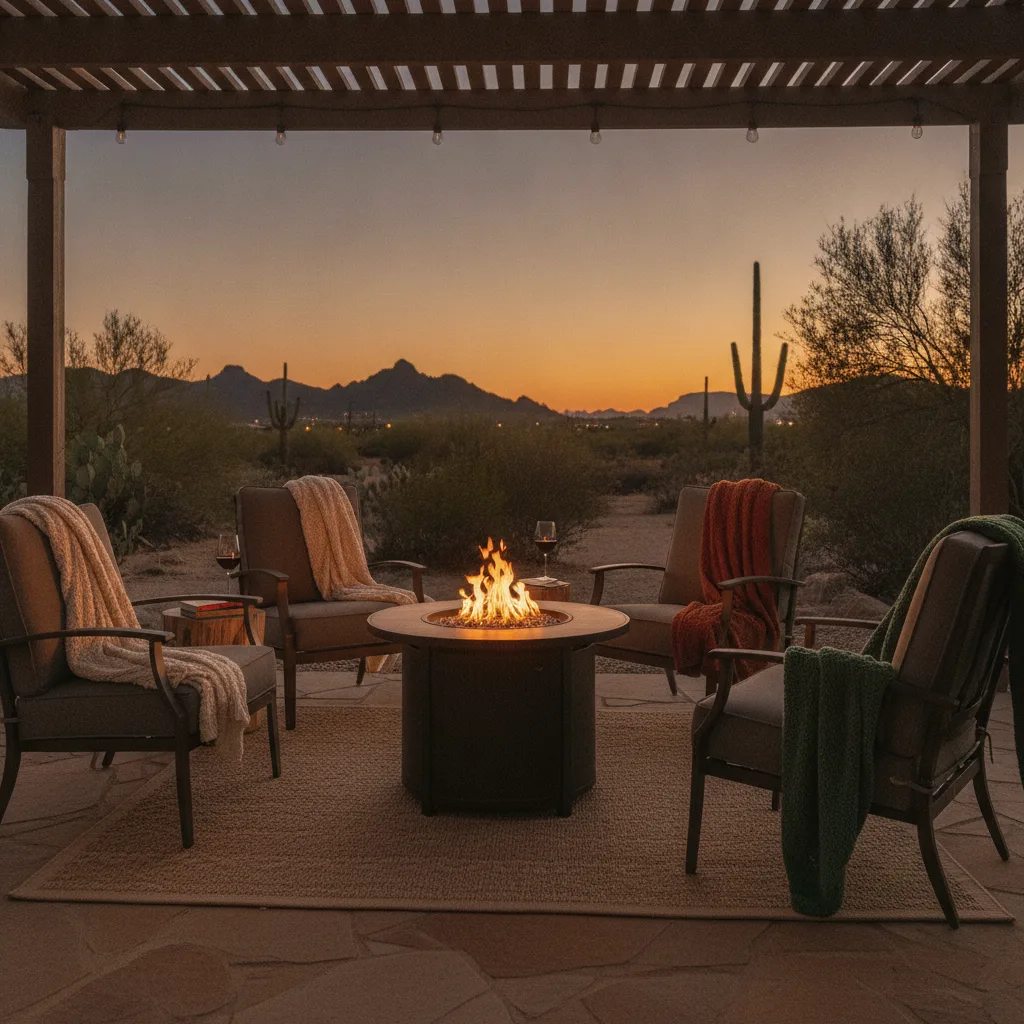
Tucson's cold weather doesn't require heavy-duty gear, but texture and softness make a real difference in how long guests actually stay outside. Start with your outdoor furniture: pieces with deep cushions in Sunbrella or solution-dyed acrylic materials handle the occasional winter damp and dry quickly after fog or light rain. Arrange seating in a U-shape or circle around the fire pit so everyone faces the heat source and no chair has its back to the fire. Good patio furniture placement is a heat management decision as much as a style one.
Add blankets stored in a weatherproof deck box near the seating area. Fleece throws cost $15–$30 each; sherpa-lined outdoor blankets run $40–$80. Stack three or four — guests will reach for them as the evening cools. Layer in throw pillows in warm earth tones, terracotta, or deep olive to add visual warmth and physical cozy feel. A 5-by-8-foot outdoor rug in a flatweave or low pile grounds the seating area and softens the patio floor underfoot. These simple touches are what separate a patio that looks inviting from one that actually is.
One underrated move: a side table or small ottoman within arm's reach of every seat. When guests have a surface for a glass of wine or a mug of something warm, they stay seated longer. Small details like this — combined with the wind protection from your retractable screen and the warmth of the fire — are what make all the difference between a patio people visit once and one they return to every weekend through the cooler months. Survey data from 2026 shows over 70% of homeowners say their outdoor living areas matter just as much in winter as in summer.
Warm white twinkle lights strung across a pergola or draped along the interior edge of your retractable screen housing create evening ambiance that keeps the outdoor space inviting and elegant well after dark. Use 2,700K–3,000K bulbs labeled warm white rather than daylight or cool white — they cast a golden glow that reads as cozy rather than clinical. A single 48-foot strand of commercial-grade G40 globe lights covers a 12-by-16-foot patio and costs $25–$60. For porch areas or sections without a nearby outlet, battery-operated string lights with a built-in timer eliminate the need for extension cords.
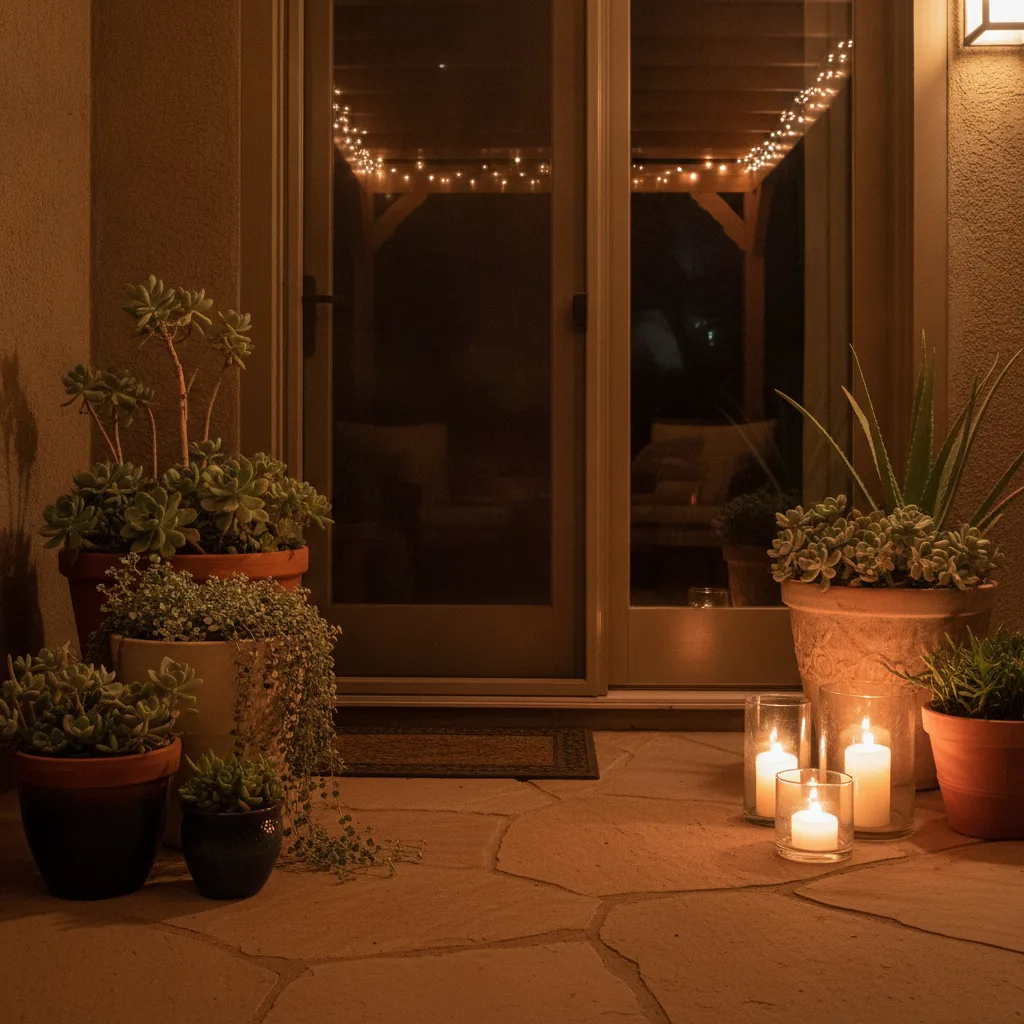
Winter greenery in planters adds color and life to a patio that might otherwise look bare in the colder months. In Tucson's desert climate, succulents and agaves stay green year round with no intervention — they don't need shelter or water adjustments to hold their structure and color through winter. For seasonal texture, add planters of rosemary, which thrives in Arizona winters, or trailing silver dichondra. Deciduous plants lose their leaves by December, so plan your planters around species that hold their form through the cool season. Evergreen topiaries in terracotta pots flanking the patio door add a welcoming sense of arrival that also works as landscaping you don't have to replace every spring.
Candles add warmth and scent at table level. Hurricane lanterns protect the flame from wind, especially on a partially open patio or porch where air still moves. Place three to five lanterns at varying heights — on the dining table, on the floor near the fire pit, on a plant stand beside a planter. The layered light from fire, twinkle lights, and candles creates the kind of ambiance that turns a functional outdoor space into the perfect spot for a winter evening with friends.
$25–$60
Warm white 2,700K bulbs create cozy evening ambiance across a full patio pergola; shatterproof bulbs handle wind and temperature drops through the cooler months
$30–$80
Protect candle flames from wind on a partially screened patio; add layered light at floor and table level to create welcoming warmth and elegance
A motorized Solution Screen with smart-home integration is what separates a winter patio you use every day from one you use occasionally. On a warm winter afternoon — Tucson regularly sees 70°F days in January and February — you want the screen up so the open air comes in. On a cold evening, you want it down in seconds without walking across the patio to find the switch. With TRSS's Connector app or a Bond Bridge Pro connected to an Amazon Echo or Google Home device, you raise or lower the screen by voice or phone tap from your patio chair. That instant control makes the system work for you rather than the other way around.
Motorized screens also protect themselves. When wind gusts hit, Tucson Signature Series motors respond to programmed wind thresholds and retract the screen automatically, keeping the fabric safe from damage. This matters in a desert climate where afternoon wind gusts during spring and the monsoon season are common — the screen doesn't need a human to protect it from weather. Set the automation once and the system manages it through every season.
The practical result is a patio that adapts to Tucson's weather in real time. Drop the screen on a cold, windy evening to trap heat from the fire pit and stay warm outdoors. Raise it on a calm, sunny afternoon to enjoy the open air and full desert view. Partially lower it on a bright winter morning to cut low-angle sun glare without blocking airflow. That kind of flexible control is what makes the investment pay off year round — not just in January, but through spring, summer, and fall as conditions change and the way you use your outdoor living areas shifts with the season.
TRSS can retrofit existing manual Solution Screen systems with motorized Tucson Signature Series motors. Ask about the upgrade option when you schedule your free in-home estimate. It's a meaningful quality-of-life improvement that most homeowners say they wish they had done sooner.
Permanent patio enclosures — glass rooms, fixed screen rooms, solid walls — solve the cold-and-wind problem but create a new one: on a 70°F Tucson winter afternoon, which happens regularly from November through March, a sealed enclosure turns into a greenhouse. You lose the open-air feeling that makes Arizona outdoor living worth having in the first place. A retractable Solution Screen gives you the enclosed, wind-protected warmth when you need it and the fully open patio when you don't. Permanent construction also triggers permits, HOA review, and construction timelines that stretch weeks or months. A motorized screen from TRSS installs in a single day with no structural changes to your house — no permit, no contractor delays, no disruption to your roof or existing walls.
For Tucson and Phoenix homeowners who want to use their patio through the colder months, the TRSS Solution Screen is the foundational piece that makes every other winter patio idea — fire pit, twinkle lights, cozy blankets, winter greenery — actually work. TRSS has been engineering and building retractable screens in Tucson since 1979, for this exact climate, with the patented Tucson Adjustable Bottom Bar, lifetime-warranted Tucson Signature Series Motors, and Mermet fabrics backed by a 10-year no-fade guarantee. About 70% of the business comes from referrals and repeat customers — people who bought once and came back when they needed more. Contact TRSS at tucsonrollingshutters.com or call (520) 297-2828 to book a free in-home estimate and find out which Solution Screen model fits your patio opening before winter is in full swing.
Ready to get started? Contact Tucson Rolling Shutters today.