MENU
In Arizona, window orientation determines how much direct sun, heat, and glare each window receives throughout the day. West and south-facing windows need the strongest exterior solar screens or rolling shutters. East-facing windows benefit from a balanced solar mesh that manages morning glare without blocking natural light. North-facing windows see minimal direct sun and need the least intervention.
Most Arizona homeowners pick window screens based on price or appearance. That approach misses the single biggest factor driving comfort, cooling costs, and sun damage in Tucson homes: which direction each window actually faces.
Window orientation determines how much direct sunlight it receives, when it receives it, and how much heat builds up inside as a result. Getting this right is the foundation of any effective sun control strategy for Tucson homes.
The sun moves predictably across southern Arizona skies. In winter, low-angle sunlight comes from the south and reaches deep into living rooms and bedrooms. East-facing glass catches strong morning rays between roughly 7 and 10 a.m. West-facing windows absorb intense afternoon sun from around 3 to 7 p.m., when outdoor temperatures are already at their peak. That heat lingers into the evening long after the sun goes down.
The key difference between standard insect screens and exterior solar screens is where the sun gets stopped. Standard screens allow airflow but do nothing to control heat. Exterior solar screens intercept radiant energy before it ever reaches the glass, outperforming interior blinds or curtains for heat reduction. Treating every window the same way almost always leaves some rooms uncomfortable and others unnecessarily dark.
Before making any decisions about screens or shutters, it helps to understand how each side of your home behaves in Tucson's climate. A simple way to test this yourself: walk through your home at 8 a.m., 1 p.m., and 5 p.m. on a July day and note which rooms are uncomfortable. Those are your priority windows.
North-facing windows receive mostly indirect light year-round. They stay cooler than any other side of the house and are your lowest priority for sun control.
South-facing windows receive sustained sun throughout the day in summer, and in winter, low-angle sunlight reaches further into living spaces than most homeowners expect. This side needs consistent exterior solar screen protection year-round.
East-facing windows catch hard morning sun between 7 and 10 a.m. Kitchens, home offices, and breakfast areas on this side are often the first rooms in the house to become uncomfortable since glare is the primary issue here, not heat.
West-facing windows are the most punishing in any Arizona home. Low-angle afternoon sun hits this side hardest, pushing indoor temperatures up and holding them there well into the evening. This is almost always where Tucson homeowners feel the problem most.
North-facing windows in Tucson homes rarely see direct sunlight. Fresh air and visibility are the main priorities here since heat gain is not a significant concern on this side of the house.
That said, there are situations where solar screens still make sense on north-facing glass. If your north side faces a street, a lighter solar mesh can provide daytime privacy without noticeably darkening the room. Reflected glare from light-colored surfaces nearby like pool decking, neighboring walls, or paving, can also create discomfort. Rolling shutters on north-facing windows are rarely necessary unless full blackout is needed for a media room or a bedroom used during daylight hours.
East-facing windows are a common source of frustration in Tucson homes, particularly in kitchens, breakfast areas, and home offices. Such spaces are most actively used during the morning hours when the sun is at its lowest and most direct angle.
Exterior solar screens in the 80% range help cut UV exposure and glare significantly while still allowing enough natural light through to keep the space feeling open. Darker mesh colors like charcoal or dark bronze deliver better glare control than lighter options. This matters most in rooms with monitors or televisions that reflect direct morning light.
For east-facing bedrooms where blackout is the goal, rolling shutters are the stronger option. Shift workers and anyone sensitive to early morning light will notice a real difference.
South-facing windows in Tucson take sustained sun for most of the year. Summer brings high-angle midday sun and Winter brings low-angle afternoon light that reaches deep into living spaces. Neither season gives the South-facing side of the house much of a break.
Large south-facing glass drives significant heat gain into your home's interior, which can accelerate UV damage to flooring, furniture, and finishes over time. Exterior solar screens in the 80–90% range manage that exposure while retaining some natural light. The right percentage depends on how the room is used and how much daylight matters.
For south-facing patio doors and large openings, pairing exterior solar screens with interior window shades creates a layered approach. Screens stay in place year-round while interior shades add control during the hottest months.
Where full heat blocking or room darkening is the goal, rolling shutters are the stronger option, particularly on second-floor rooms where heat compounds from the roofline.
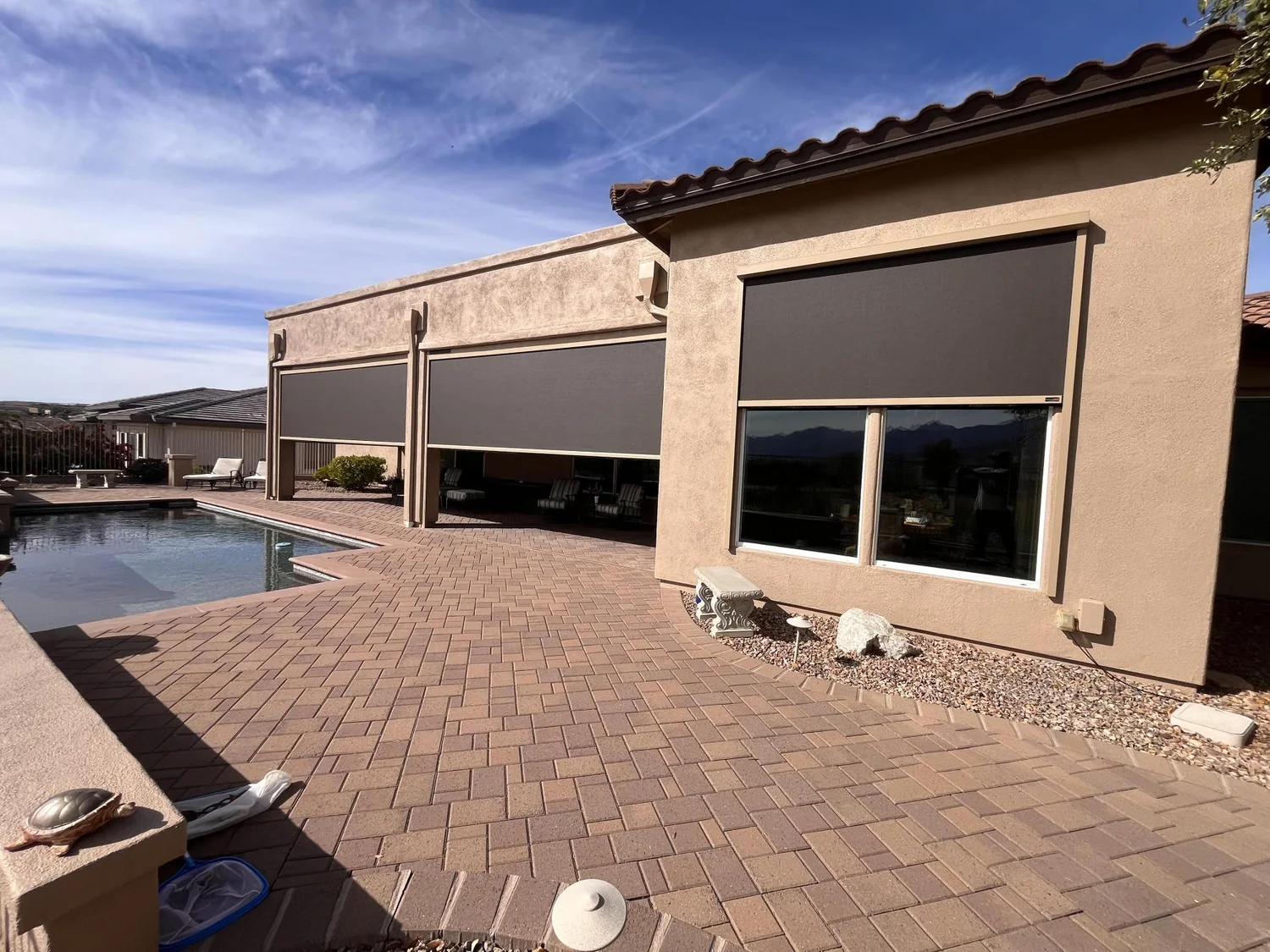
West-facing windows are where most Tucson homeowners feel the problem first. From around 3 to 7 p.m. in summer, this side absorbs intense afternoon sun. Indoor temperatures rise and stay elevated well into the evening, making bedrooms hard to sleep in and living rooms unusable.
Exterior solar screens on west-facing windows require the densest mesh available. A 90% solar fabric delivers heat reduction and glare control that interior treatments cannot match. The screen intercepts heat before it ever reaches the glass. When budgeting for sun control, west-facing windows should always come first.
For rooms with large west-facing glass or upper-floor bedrooms that hold heat overnight, rolling shutters are the most effective option. The west side of a Tucson home is almost always where the right investment pays back the fastest.
Arizona's monsoon season runs roughly from July through September. High winds and sideways rain add stress to exterior solar screens, particularly on west and south exposures. Frame quality, mounting hardware, and installation method matter just as much as fabric choice.
After dust storms, rinsing screens with a gentle hose spray keeps them performing correctly. Inspecting west and south-facing screens each spring catches any damage from the prior monsoon season before peak summer arrives. Tucson Rolling Shutters & Screens installs all exterior solar screens and rolling shutters with monsoon conditions in mind; proper tensioning and secure fastening are part of every installation.
Orientation-aware sun control is one of the most practical improvements a Tucson homeowner can make. The right exterior solar screen or rolling shutter on the right window reduces cooling costs, protects interiors from UV damage, and makes rooms usable by blocking heat or preventing glare.
Tucson Rolling Shutters & Screens has been helping Arizona homeowners get this right since 1979. Schedule a free consultation to get started.
Do Tucson homeowners really need different screens on different sides of their home?
Using the same screen on every window over-darkens rooms that do not need it while leaving the most sun-exposed glass under-protected. Mixing 90% solar mesh on west-facing windows, 80% on south and east glass, and a lighter solution on north-facing windows delivers better comfort throughout the home.
Will solar screens make rooms too dark?
It depends on the percentage and the direction the window faces. A 90% screen on a west or south-facing window will reduce light noticeably but dramatically cuts heat and glare. On east or north-facing glass, an 80% screen preserves more natural light while still managing UV exposure.
Are rolling shutters necessary or just a premium upgrade?
Rolling shutters are not the right solution for every window. They make the most sense on large west or south-facing glass that overheats rooms, bedrooms that need genuine blackout, or spaces where noise reduction alongside heat control matters. Many Tucson homeowners use solar screens across most windows and reserve rolling shutters for the openings that cause the most discomfort.
Which windows should Tucson homeowners prioritize first?
West-facing rooms that overheat in the late afternoon and evening are almost always the first priority. South-facing rooms that receive direct midday sun come next, followed by east-facing spaces with morning glare problems. North-facing windows are rarely urgent. Tucson Rolling Shutters & Screens offers free in-home consultations to assess each window's orientation and recommend the right solution for the home's specific layout.