MENU
Cheap retractable screen doors fail in Arizona through three specific mechanisms: UV radiation chalks and tears polyester-core mesh within two to three years; haboob dust packs into tracks and rollers, cutting screen door functionality by 40% to 60% within 6 to 12 months; and monsoon wind gusts up to 70 mph pull fabric off cable-guided systems entirely. The fix is an in-rail tension system using Mermet fiberglass fabric, a powder-coated T6061 aluminum housing, and a self-leveling bottom bar that seals out grit. TRSS Solution Screens, manufactured in Tucson, AZ since 1979, combine all three engineering answers and carry a 10-year no-fade fabric warranty plus a lifetime warranty on motors and electronics.
Retractable screens in Arizona fail for three specific reasons: UV radiation that structurally degrades cheap mesh within two to three years, haboob dust that packs into tracks and rollers until the screen door jams, and monsoon wind gusts up to 70 mph that rip fabric off cable-guided systems entirely. This guide explains the mechanical reality behind each failure mode, the engineering features that prevent them, and how to match the right retractable screen door system to your front door, French doors, double doors, or wide patio opening. If you're a homeowner in Tucson, Phoenix, Scottsdale, Sedona, or anywhere across the Phoenix Valley, the information here will help you buy once instead of replacing a cheap screen every few years — and start enjoying your outdoor spaces the way they were designed to be used.
Arizona's sun doesn't just fade a cheap screen — it structurally degrades it. The desert delivers sustained UV radiation at intensities that break down polyester-core mesh within two to three years, causing the fabric to chalk, stiffen, and tear at stress points near the door frame and housing. That's not cosmetic wear. It's a material failure that leaves gaps, reduces airflow, and stops the screen from functioning as a barrier against bugs and dirt. For anyone taking the time to research arizona retractable screens before buying, understanding this failure mode is the most important place to start.
Daily temperature swings of roughly 40 degrees Fahrenheit force constant thermal cycling across every component of a retractable screen door. A friction-fit screen insert or cheaply riveted aluminum door frame expands and contracts enough times each summer that fasteners loosen, corners gap, and the mesh eventually pulls away from its anchor points. No amount of maintenance can address this problem if the design is wrong from the beginning. Powder-coated T6061 aluminum extrusions, the material used in TRSS Solution Screens manufactured in Tucson, AZ, resist this expansion cycle far better than thin painted steel or bare aluminum — making them an excellent choice for the Arizona environment.
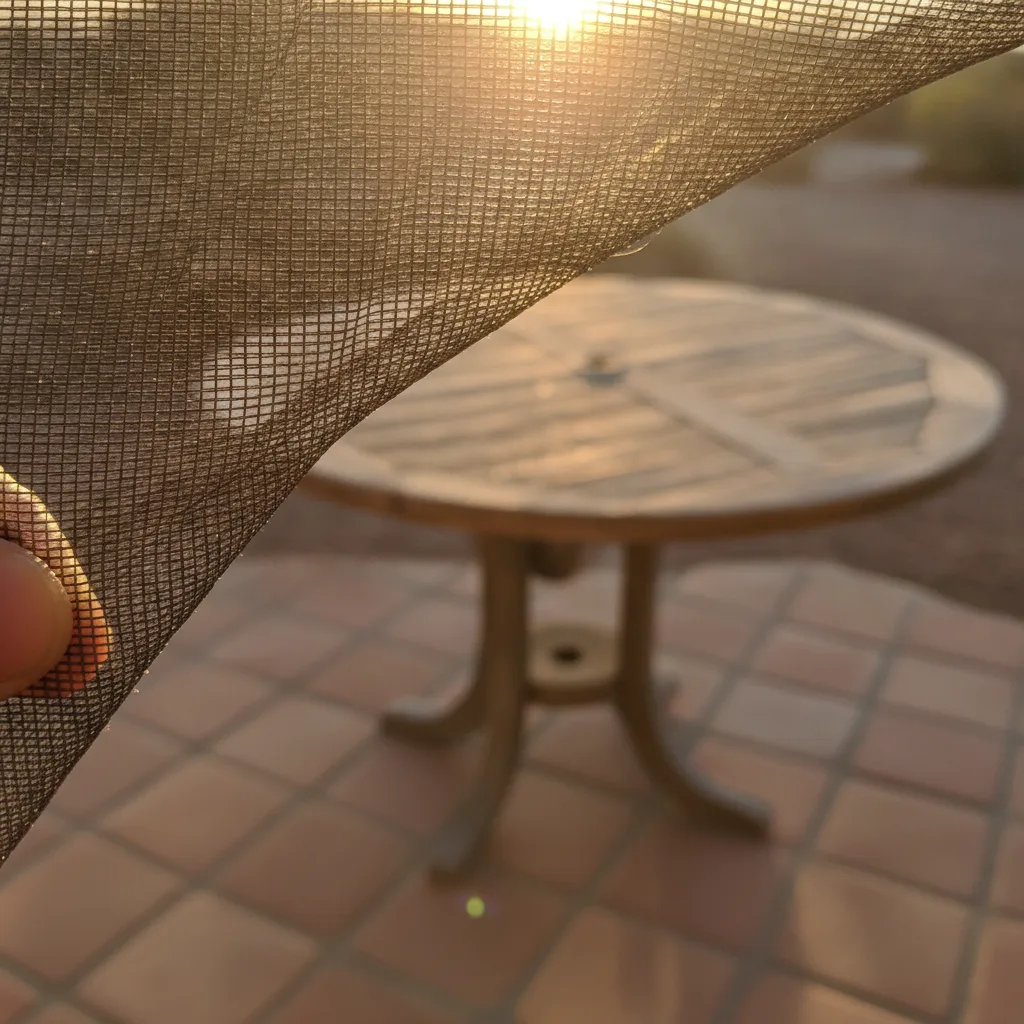
The fabric itself is the first decision that separates a screen with lasting functionality from one that doesn't last two seasons. Mermet fiberglass fabrics, available through TRSS in 1%, 3%, 5%, and 10% openness factors, are dimensionally stable in heat. Polyester-core fabrics sag and wrinkle as temperatures climb. In a climate where afternoon patio temperatures regularly exceed 110 degrees, that difference shows up fast. TRSS Solution Screens block up to 99% of UV rays and solar heat, keeping outdoor spaces 10 to 15 degrees cooler when deployed, and carry a 10-year no-fade warranty on Mermet exterior fabrics to back that claim. Homeowners love the design: the screens are virtually invisible when retracted, adding beauty to the home without altering its exterior appearance.
South- and west-facing openings in Phoenix and Tucson benefit most from 1% to 3% openness fabric. That range delivers maximum glare and heat control without making the screen feel like a wall. Reserve 5% to 10% openness for north-facing or shaded doorways where views and airflow matter more than heat rejection. The difference in daytime comfort is substantial on a patio that catches the full Arizona afternoon sun.
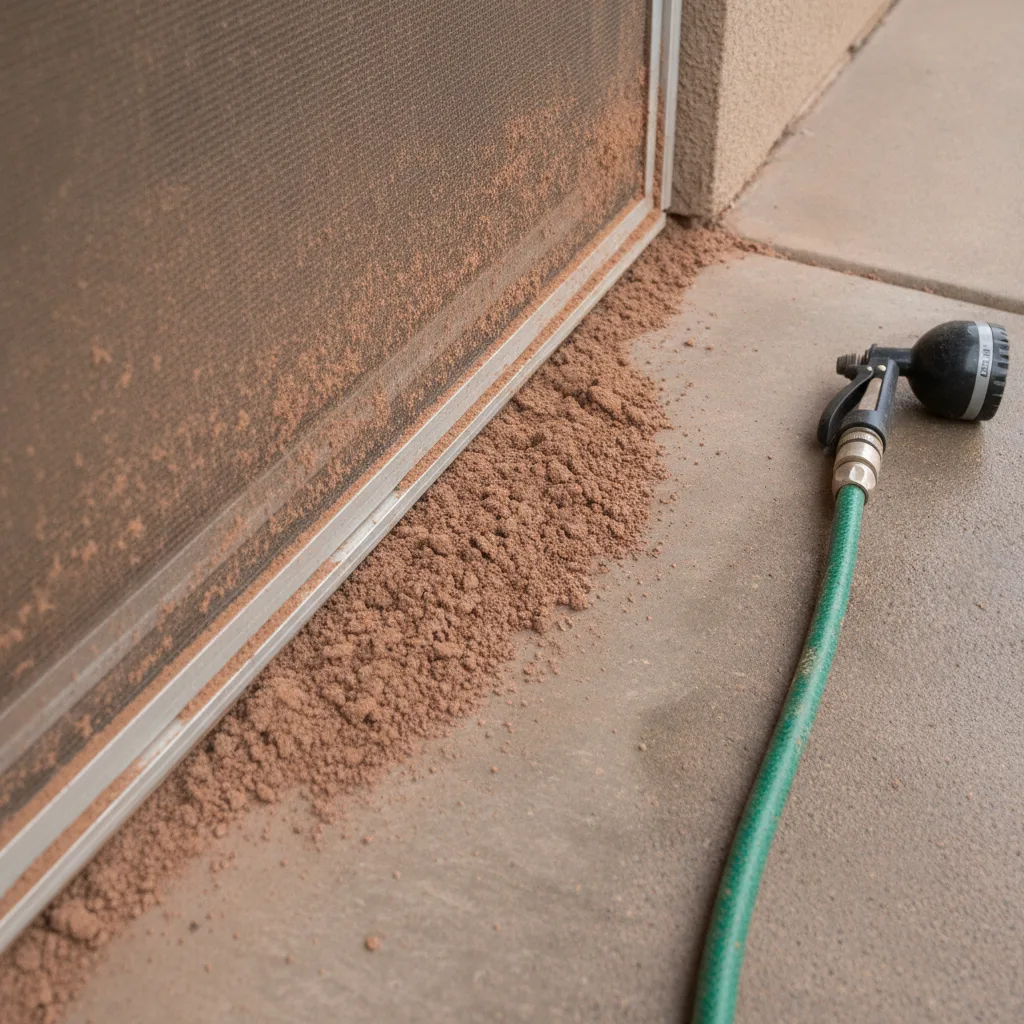
Arizona's monsoon season runs June through September and brings haboobs: massive dust storms moving at 40 to 60 mph with gusts that reached 70 mph during the August 2025 Phoenix event. Those storms deposit fine silty sediment across every exterior surface, and that grit finds its way into screen tracks, rollers, and mesh within minutes of a storm passing. A screen that looks clean from a distance may already have enough packed dirt in its tracks to begin grinding the roller mechanism. This is not a problem that only affects neglected screens — even well-maintained systems on a site with heavy west-facing exposure need consistent attention during monsoon days.
Dust accumulation is a mechanical problem, not just a cosmetic one. If a retractable screen door system is not properly designed and regularly maintained, dust packed into the tracks and housing can reduce screen door functionality by 40% to 60% within 6 to 12 months. The grit acts like sandpaper on rollers and fabric edges every time the screen deploys or retracts, accelerating wear and eventually causing jamming or complete failure to retract. That's the sign that a cheap product has already been compromised by the Arizona environment. Many homeowners share this experience in their review of budget screens: the screen worked fine for the first season, then became difficult to use — and impossible to trust — by the second.
Track design is the engineering answer to Arizona's dust problem. Cable-guided retractable screens leave the fabric edge loosely tensioned with gaps along the door frame where dust enters freely. In-rail systems, like the fabric tension system used in TRSS Solution Screens, keep the fabric edge captured inside a continuous side channel. That channel limits how much particulate reaches the roller mechanism and keeps the screen edge sealed against the door frame, which also stops unwanted pests from squeezing through the gap. The patented Tucson Adjustable Bottom Bar (TABB) adds a self-leveling seal at the floor, automatically closing off the bottom gap even on sloped or uneven patio surfaces, available on Solution Screens up to 17 feet wide. Regular maintenance still matters: a garden hose flush of the tracks and mesh every two to three weeks during monsoon season keeps airflow at full capacity and protects the roller mechanism from grinding damage. Taking time to do that simple task adds years to the screen's service life.
The safest habit during a severe haboob warning is to retract the screen fully into its housing before the wall of dust arrives. The mesh stays protected inside the housing during storage, tucked away from the worst of the storm. That's the core advantage retractable screen door systems have over fixed door screens, which take the full force of every storm with no option to shelter the fabric.
Arizona's structural design wind speed benchmark runs 95 to 110 mph. Quality retractable patio screens engineered for the desert are rated to 100 mph wind resistance, but that rating only holds if the screen is track-guided, properly tensioned, and mounted with hardware that can transfer the load into the door frame or structural header. A screen that checks those boxes handles normal Arizona monsoon wind without being retracted first — making it an excellent product for homeowners in Maricopa County, the Tucson metro, and other high-exposure communities across the state.
Wind load is where cable-guided systems fail first. Under sustained pressure, a loose cable allows the fabric to billow and flutter, transferring stress unevenly across the mesh and seams. A single monsoon gust can push a poorly tensioned screen off its cable, shredding the edge of the fabric against the door frame. In-rail systems prevent billowing by keeping the fabric captured in the side channel at every point along its height, distributing wind load across the full track length instead of concentrating it at the cable anchors. That structural difference is what makes an in-rail screen the perfect solution for high-exposure openings in the Phoenix Valley or Scottsdale — and the reason experienced installers always recommend it over cable-guided alternatives for Arizona's conditions.
TRSS Solution Screens use extruded T6061 aluminum housing with in-rail fabric tension. The housing is powder-coated in-house at the TRSS Tucson facility using an eco-friendly process that bonds color into the aluminum rather than painting over it, meaning the housing won't chalk or peel under full Arizona sun. Models cover openings from 2 feet wide up to 32 feet wide with the s7 Solution Screen, so the same engineered system that handles a standard front door works across a wide patio span. These screens are uniquely designed for the Arizona environment, not adapted from a generic product built for milder climates. The finish quality and color consistency are built to last decades, not just a few seasons.
Motorized retractable screens can be paired with wind sensors that automatically retract the screen when gusts exceed a set threshold. For west-facing patios in the Phoenix Valley or Scottsdale that catch afternoon storm winds without warning, that automation removes the risk of forgetting to retract before a haboob hits. Motorized operation also makes large-span screens more efficient to deploy and retract daily.
Retractable screen doors are not one-size applications. A standard front door, a set of French doors, double doors on a great room, and a wide patio span each have different width, clearance, and mounting requirements. The wrong choice means a screen that's undersized, over-stressed, or impossible to operate without catching on the door frame. Getting this right from the start — before the screen is measured, ordered, and installed — is what separates a confident long-term purchase from a frustrating experience that leads to an early replacement.
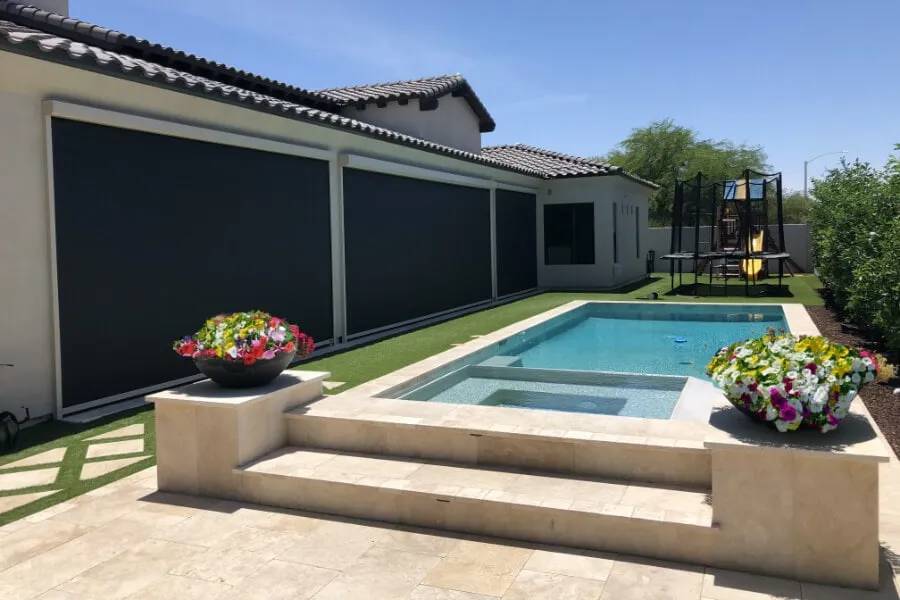
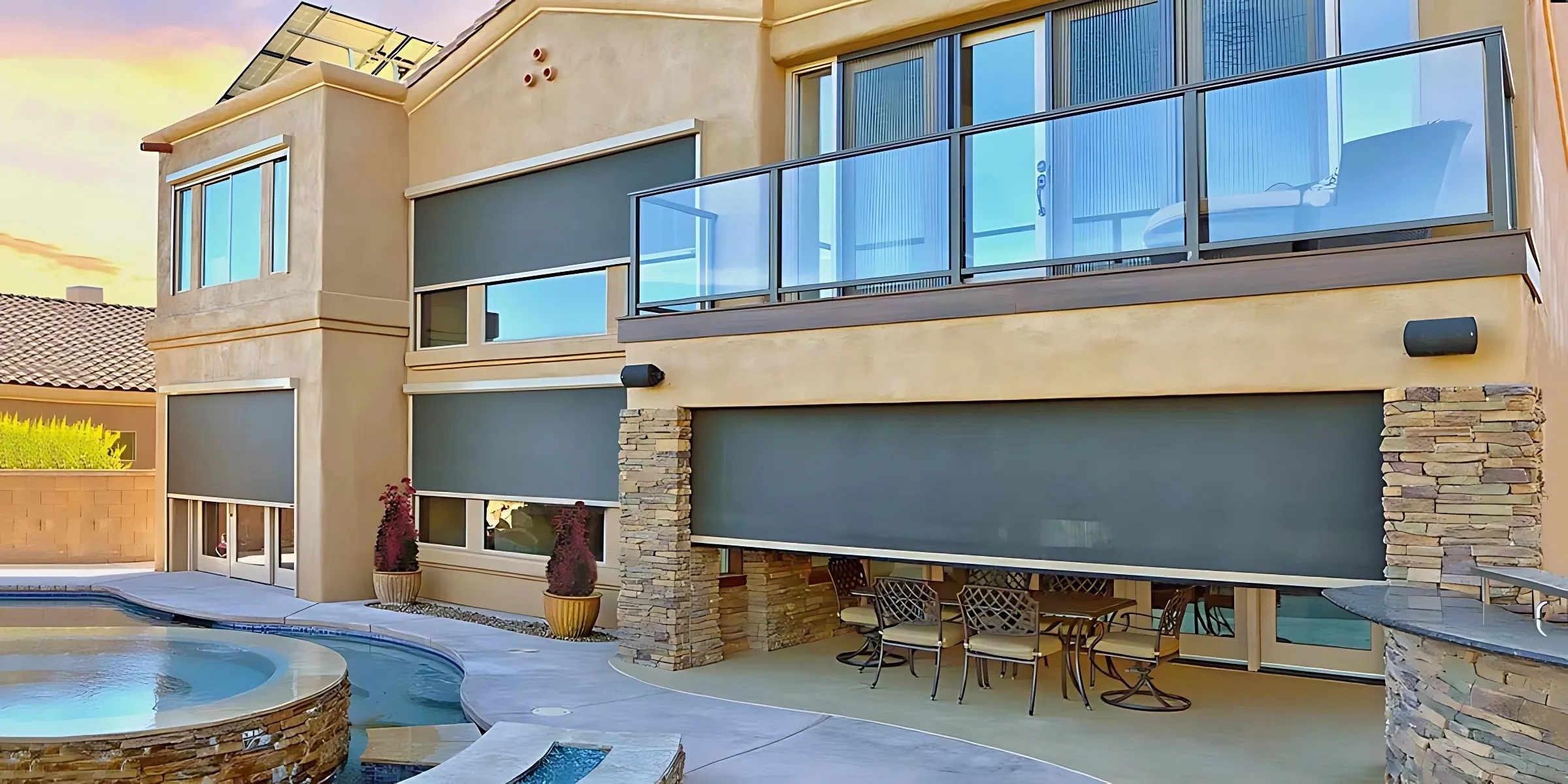
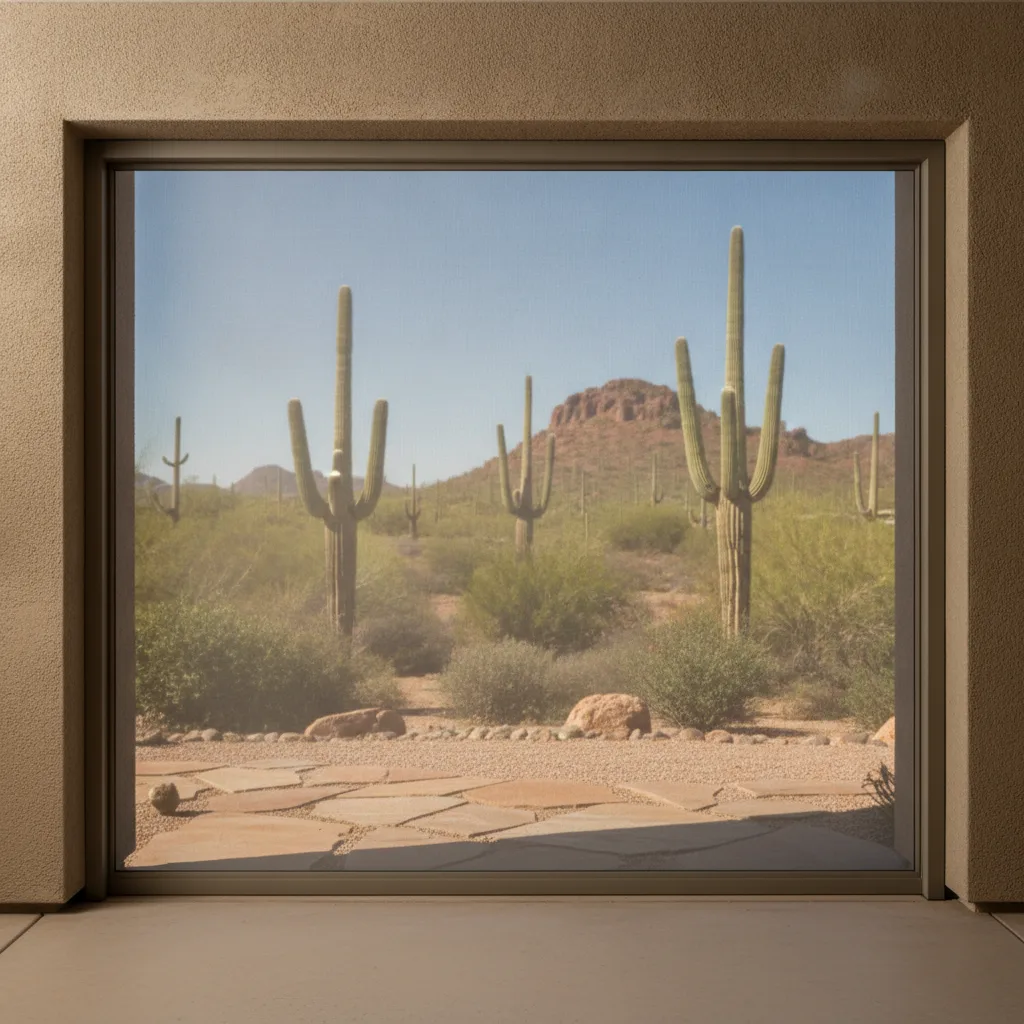
Single retractable screen doors for front door openings typically cover widths up to 48 inches. French doors and double doors need a two-panel or bi-part retractable system where each screen panel retracts to its own side housing, keeping the center clear when two doors are open. For a bi-part screen on double doors, the two doors each get their own retractable panel that remain hidden in side housings when not in use, so the view and the glass stay unobstructed. For large patio openings, common in Scottsdale and Tucson homes with covered ramadas or wide apertures, TRSS Solution Screen models scale from the s4 through the s7, which handles a single span up to 32 feet wide and 20 feet tall. That means a single screen door system can cover an entire house patio opening without a center post interrupting the view or the fresh Arizona breeze. Homeowners in beautiful communities from Maricopa County through Sedona love this design for exactly that reason.
Motorized operation via handheld radio remote, the TRS Hub app, Alexa, or Google Home is worth factoring in for any opening wider than about 10 feet. Manual operation on a large-span screen requires consistent effort to deploy evenly, and in Arizona's heat, any friction from dust in the track makes that harder over time. Motorized screens paired with Tucson Signature Series motors and electronics carry a lifetime warranty, which matters when the motor is doing daily work in a climate that runs hot 10 months a year. Allowing fresh air into the home with a push of a button, while keeping unwanted pests and insects out, is exactly what this system is built to deliver.
The national average cost of a screen door installation is around $300, but retractable and custom screen doors run $400 to $1,000 or more depending on size, motorization, and features (2026 Angi data). In Arizona, custom-fit motorized retractable screens for patio spans often land higher. That number needs to be weighed against total cost of ownership, not compared to a cheap kit at face value. When you select a product based solely on the lowest quote, you're making a short-term choice that rarely works out over time in the Arizona climate.
A cheap fixed screen or a low-cost retractable screen door system installed in Tucson or Phoenix will likely need to be replaced within three to five years. Polyester mesh degrades in full desert sun. Thin aluminum door frames corrode or warp under thermal cycling. Cable systems loosen and pull off their guides. Each replacement runs another $300 to $600 installed. The addition of two or three replacement cycles makes the total cost of a cheap screen far higher than a quality manufacturer-built product. A manufacturer-built retractable screen with fiberglass Mermet fabric, a powder-coated aluminum housing, and a lifetime motor warranty is a one-time purchase. That's the difference between an excellent product and a recurring cost. One kind review from a neighbor who's had their screen last 15 years is worth more than a low bid from a company that won't be reachable for a warranty call in year three.
TRSS manufactures every Solution Screen in-house at its Tucson facility — not reselling imported product — which means tolerances are controlled, the warranty is backed by the manufacturer, and the company has been standing behind its screens since 1979. About 70% of TRSS's businesses come from referrals and repeat customers: that's the real proof point that satisfied customers who bought once came back and sent their neighbors. TRSS's installer crews are TRSS employees, not subcontractors. That matters when something needs to be adjusted or a warranty claim needs to be filed. For homeowners and businesses across the Phoenix Valley, Tucson markets, Verde Valley, Prescott Quad Cities, and Sedona, the installation experience from a company providing service across Arizona and installing thousands of screens over decades is substantively different from a one-off reseller. The rating TRSS maintains with its customer base reflects that difference.
Before choosing on price alone, ask each company whether they manufacture or resell. A reseller quoting cheaper than a manufacturer often means imported hardware, generic mesh, and no factory warranty backing the product. The difference in long-term cost of ownership in Arizona's climate is substantial. One kind review from a neighbor who had their screen last 15 years is worth more than a low bid from a company that won't be reachable for a warranty call in year three.
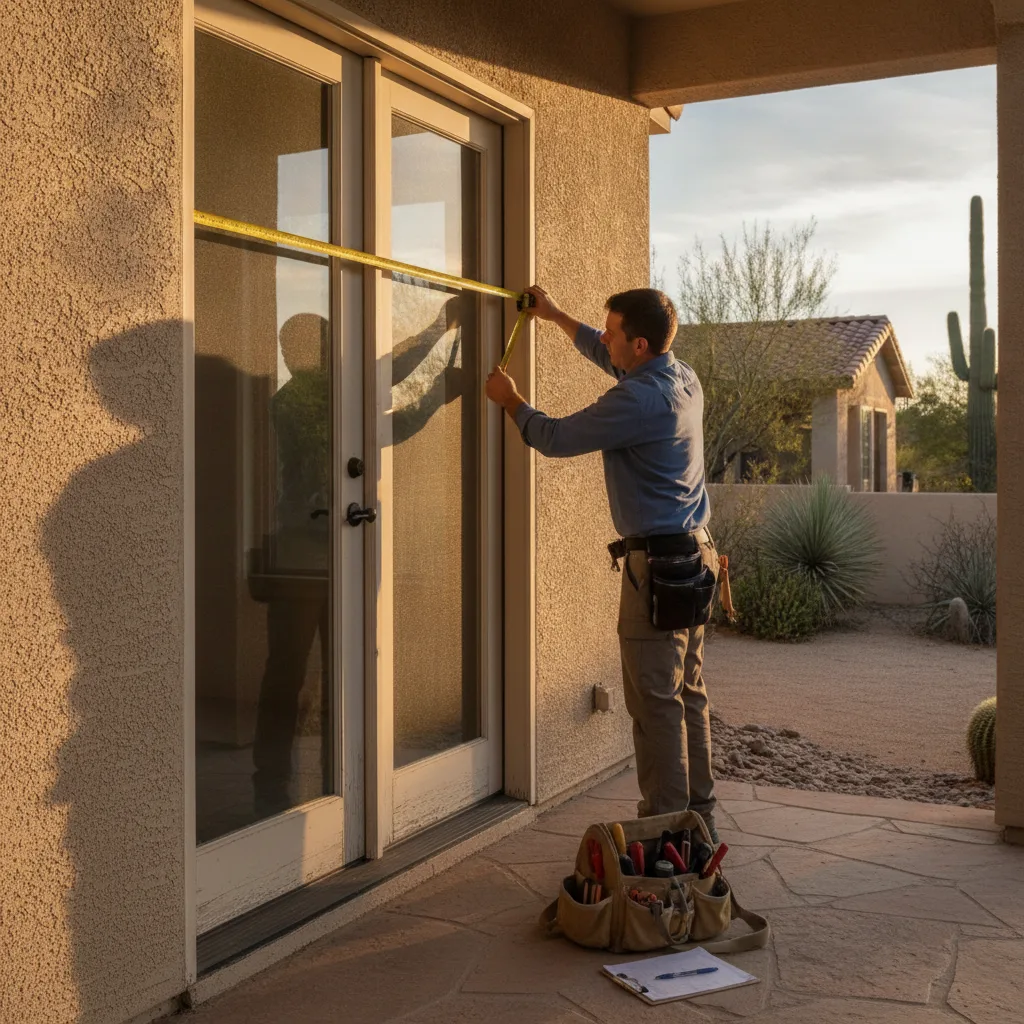
Retractable screens that work in Arizona are custom built to the specific door frame, patio opening, or doorway — not pulled from a box and trimmed to approximate size. A professional measurement confirms the exact width, height, and mounting depth available in the door frame or header, identifies whether the floor is sloped (triggering the need for the TABB self-leveling bottom bar), and determines the right housing size for the opening. Getting this process right before installation is what separates a screen that operates perfectly from one that binds, gaps, or fails to seal. The team that visits your home should address all of these variables before making a recommendation — not after the product has already been ordered.
TRSS sends its own installation crews, no subcontractors, to Tucson, Phoenix, Scottsdale, Chandler, Gilbert, Mesa, and surrounding communities across the Phoenix Valley and Tucson markets. The in-home estimate is free, and it's the step where fabric openness, custom color options (powder-coated in dozens of colors), motorization, and smart-home integration get matched to your specific home and exposure. The staff who handle measurements are TRSS employees who are trained in the company's own product line — not third-party installers working from a spec sheet. For anyone in the Verde Valley, Prescott Quad Cities area, Sedona, or northern Arizona, TRSS's reach extends statewide. The company's experience providing service across Arizona's varied climates, from the low desert heat of Phoenix to the higher-elevation winds of Prescott, means the recommendation you get is specific to your site, not a generic product pitch. Happy customers across the state have shared that the experience of working with a knowledgeable, friendly team made the whole process straightforward and confidence-inspiring from the first visit.
Contact TRSS at tucsonrollingshutters.com/contact-us or call (520) 297-2828 to book your appointment and get an instant quote. Installing thousands of screens across Arizona since 1979 means the measurement and recommendation process is polite, efficient, and transparent — you get a fixed quote, not a range that expands after installation begins. That's the sign of a company that knows what it's doing and stands behind what it installs. If you have questions before booking, the team is reachable by phone during business days and is glad to walk through your options before an in-home visit is scheduled.
Most retractable screen door failures in Arizona happen during the first or second monsoon season after installation, when haboob dust packs the tracks, a 60 mph gust pulls the fabric off a cable guide, or sun-degraded mesh tears at the door frame. By that point, the warranty on a cheap product has already expired and a replacement is due. The right time to spec a desert-rated retractable screen is before the problem occurs, not after. TRSS Solution Screens are uniquely designed and engineered specifically for this climate, manufactured in Tucson, and backed by a 10-year no-fade fabric warranty and a lifetime warranty on Tucson Signature Series motors. If you're in Tucson, Phoenix, Scottsdale, or anywhere across Arizona, book your free in-home estimate today — before the next season puts your screen to the test. Visit tucsonrollingshutters.com/contact-us or call (520) 297-2828.
For Arizona homeowners in Tucson, Phoenix, Scottsdale, and the Phoenix Valley who want to get real use out of their patio and doorways without replacing cheap door screens every few years, TRSS Solution Screens are the manufacturer-built answer to what heat, dust, and monsoon wind actually do to screen doors. The engineering is specific: in-rail tension systems that seal the fabric edge inside the track, Mermet fiberglass fabrics that stay dimensionally stable in 110-degree heat, the patented TABB that self-levels on sloped patio floors, and a lifetime warranty on motors and electronics. TRSS has been building retractable screens in Tucson since 1979 — for this exact climate, for this exact property type, with professional installation by its own staff across Arizona. Contact TRSS today at tucsonrollingshutters.com/contact-us or call (520) 297-2828 to schedule your free in-home estimate and get a fixed quote on a screen built to last.
Ready to get started? Contact Tucson Rolling Shutters today.