
MENU

To winterize outdoor furniture in Tucson or Phoenix, clean every piece with mild dish soap and warm water, dry it completely, then treat each material type: car wax on aluminum frames, exterior metal paint touch-ups on wrought iron, teak oil or linseed oil on wood, and paste wax on natural wicker before indoor storage. Always bring fabric cushions and outdoor pillows indoors — even in Arizona's mild winters. Plastic furniture and natural wicker furniture should come into a garage or shed. HDPE and aluminum can remain outdoors with covers secured by bungee cords or straps. The step most Tucson homeowners skip: blocking low-angle winter sun with retractable Solution Screens from TRSS, which cut UV exposure by up to 95% on everything that stays outside.
To winterize outdoor furniture in Tucson, the first thing to get right is the threat model: Arizona's winter sun — not freezing temperatures — does the most damage to patio furniture from November through February. With over 300 days of sunshine per year and UV radiation intense enough to cause sunburn in 15 minutes even in December, Tucson's desert climate means UV is a year-round constant. This guide covers every material type (aluminum, wrought iron, teak, wicker, HDPE, plastic, and outdoor cushions), gives you a clean-and-treat routine you can complete in 2–4 hours, and explains why retractable Solution Screens from Tucson Rolling Shutters and Screens are the one upgrade that protects outdoor furniture year-round without requiring anything to be moved.

Arizona's winter sun is the primary threat to outdoor furniture from November through February — not freezing temperatures. Tucson gets over 300 days of sunshine per year, and in winter the sun drops to a lower angle that slides directly under standard overhead coverage, hammering cushions, wood finishes, aluminum frames, and armrests for hours every day. UV radiation in Arizona is intense enough to cause sunburn in 15 minutes, year-round — including in December and January. This is the damage most Tucson and Phoenix homeowners don't account for when preparing outdoor patio furniture for winter.
Standard outdoor fabrics — cotton blends, basic polyester — show noticeable fading and weakening within a single Arizona summer season, typically 3–6 months of exposure. Budget furniture can fail in 1–3 years. Winter doesn't pause that damage; the low-angle sun from November through February hits surfaces that a patio umbrella or pergola roof doesn't cover in summer. Cushions and upholstery that look fine in July are accumulating UV damage all winter long from oblique angles that overhead coverage misses entirely.
Cold weather does still matter in Tucson. Plastic furniture can crack and become brittle at freezing temperatures. Natural wicker furniture can split in freeze-thaw cycles. Wrought iron is prone to rust during winter rain. Knowing which threat applies to each material — UV, cold, moisture, or all three — is what separates smart winterizing from just throwing a tarp over everything and hoping for the best.
This guide is written for Tucson and Phoenix desert climates. If you're reading from a colder region that gets heavy snow and ice, your priority order shifts — moisture and freezing temperatures become more urgent than UV. In the desert, UV is the year-round constant, and low-angle winter sun from November through February is the most underestimated threat to outdoor furniture.
Storing outdoor furniture while dirty is the second-fastest way to ruin it — storing it while damp is the fastest. Loose dirt, dust, and debris trapped under a cover or inside a storage bag retain moisture and accelerate mildew, staining, and rust. Clean every piece before it goes into winter storage or gets covered for the season. No exceptions.
For most furniture frames — aluminum, wrought iron, teak, wicker — mix a few drops of mild dish soap into a bucket of warm water and scrub with a soft brush. Rinse completely with a hose, then wipe surfaces dry with a soft cloth and let pieces air dry completely before applying any protective treatment or placing covers. For fabric cushions and outdoor pillows, spot-treat any stains with mild soap and warm water, rinse, and lay flat in direct sun to dry fully — at least 4–6 hours in Arizona's dry air. Use a mild detergent solution if stains need extra attention before you put anything in indoor storage.
Check furniture for damage during this cleaning pass: scratches in aluminum coating, rust spots on wrought iron, cracks in wicker, splits in wood, rips or tears in cushion covers. Inspect foot caps and straps as well. Catching small damage now means a quick repair before spring, not a costly replacement when you pull everything out again next season.
Storing cushions or furniture while still damp — even slightly — is the number-one winterizing mistake. Moisture trapped inside a bag or under a cover through winter months causes mildew, odors, and rot that no amount of spring cleaning can fully fix. When in doubt, give pieces an extra hour of drying time before anything goes into storage.
Aluminum furniture is nearly rust-proof, but its protective coating needs care. After washing and drying completely, apply car wax to aluminum frames — it fills micro-scratches, prevents oxidation, and adds a layer of UV protection through the winter months. Two thin coats of car wax take about 20 minutes and can extend the finish life across many years. Wrought iron requires more attention: remove any rust with fine-grit sandpaper, clean the surface, and touch up chips and scratches with exterior metal paint before the rainy season hits. Metal furniture with any exposed bare steel will rust fast under winter weather — this step deserves special attention every year.
Teak furniture is the most forgiving of Arizona's harsh weather conditions and can remain outdoors year-round if maintained. Use a soft brush with a mild detergent solution to clean teak, rinse with warm water, and let it dry completely before applying a teak sealer or linseed oil (or tung oil) to prevent natural oils from evaporating under UV exposure. For other wood furniture — pine, cedar, painted wood — sand any rough patches and apply a fresh coat of sealant or exterior paint annually. UV and winter moisture together will dry out natural oils and cause warping or splitting if left unprotected. Natural wicker furniture should come indoors. Clean it, dry it thoroughly, apply a thin coat of paste wax or lemon oil, and store it in a dry place like a garage or shed. Wicker cracks in freeze-thaw cycles, and cheaper resin wicker becomes brittle in cold weather.
High-density polyethylene (HDPE) furniture — often sold as recycled plastic lumber chairs and tables — can safely remain outdoors all winter. It's water-resistant, UV-stable, and won't crack in freezing temperatures. Standard plastic furniture (thin-walled injection-molded chairs) should come indoors if possible, because cold temperatures cause cracking and brittleness. Stack plastic chairs in a garage or shed and wrap them with a breathable tarp secured with bungee cords to keep them clean and protected. Fire pits and stone furniture benefit from a stone sealer applied before winter to repel moisture and prevent cracking from freeze-thaw cycles.
Can remain outdoors with covers: aluminum furniture, HDPE furniture, teak furniture (with fresh oil). Must come inside: natural wicker furniture, standard plastic furniture, all fabric cushions and outdoor pillows. Wrought iron can stay outside only if rust is removed and paint touched up beforehand — otherwise moisture will accelerate rust damage through winter.

Outdoor cushions and outdoor pillows are the most vulnerable component of any patio furniture set — always bring them indoors for winter storage, without exception. Even fabrics marketed as outdoor-grade will fade, develop mildew, and deteriorate faster when exposed to months of UV radiation and winter weather. In Arizona, the winter sun angle means cushions that looked protected under a pergola in summer are fully exposed to low-angle UV for 4–6 hours a day from November through February.
Store fabric cushions in a dry, temperature-controlled indoor space: a closet, basement, attic, or garage all work. Place cushions in breathable waterproof storage bags or cushion covers — not sealed plastic bags, which trap moisture and promote mildew. Stack chairs and cushions vertically if space is tight. Remove cushion covers and wash them separately per the care label before putting them in indoor storage.
If indoor storage space is limited, prioritize cushions over frames. Metal and teak frames can handle winter outdoors with proper treatment. Cushions cannot. A teak chair that winters outdoors costs you nothing. The same teak chair's cushions, left outside through February's low-angle sun and dust storms, may need full replacement before spring — and a quality cushion set runs $200–$800 to replace. That math alone makes the indoor storage step worth doing every year.
Garage or shed storage works well for most Tucson homeowners. If you don't have enclosed indoor storage, a deck box with ventilation can extend cushion life — but it's not a substitute for true indoor storage through the full winter season. At minimum, keep cushions off the ground, out of direct sun, and completely dry before they go in.
Furniture frames that remain outdoors need covers designed to handle Arizona's specific combination of UV, monsoon wind gusts, and dust. Use breathable, waterproof furniture covers sized to fit snugly — a loose cover in heavy winds becomes a sail that scratches the frame underneath it. Secure covers with straps, ties, or bungee cords at foot level to prevent wind lift. For tables and chairs you plan to use on warm winter days, removable covers with quick-release buckles make daily deployment practical.
Standard furniture covers stop debris and rain, but they don't address the low-angle winter sun that hits from the south and southwest in Tucson's lower desert from November through February. A pergola or overhead patio cover blocks summer sun effectively, but its coverage geometry changes in winter — the sun arc is 20–30 degrees lower, sending direct UV under the overhang onto seating surfaces, armrests, and frames. Covers placed on the furniture protect what's under them, but they don't intercept UV before it reaches the patio floor, surrounding decor, or anything left uncovered.
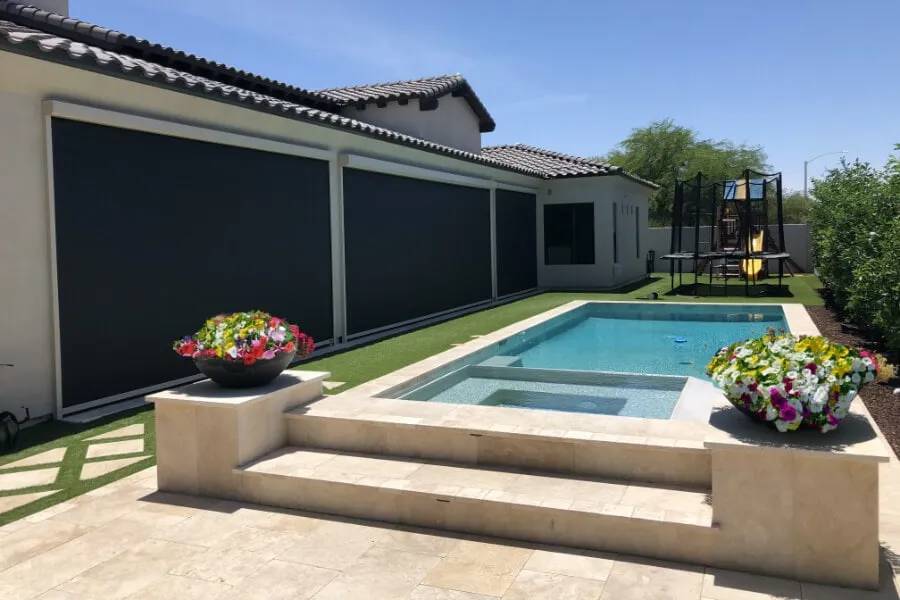
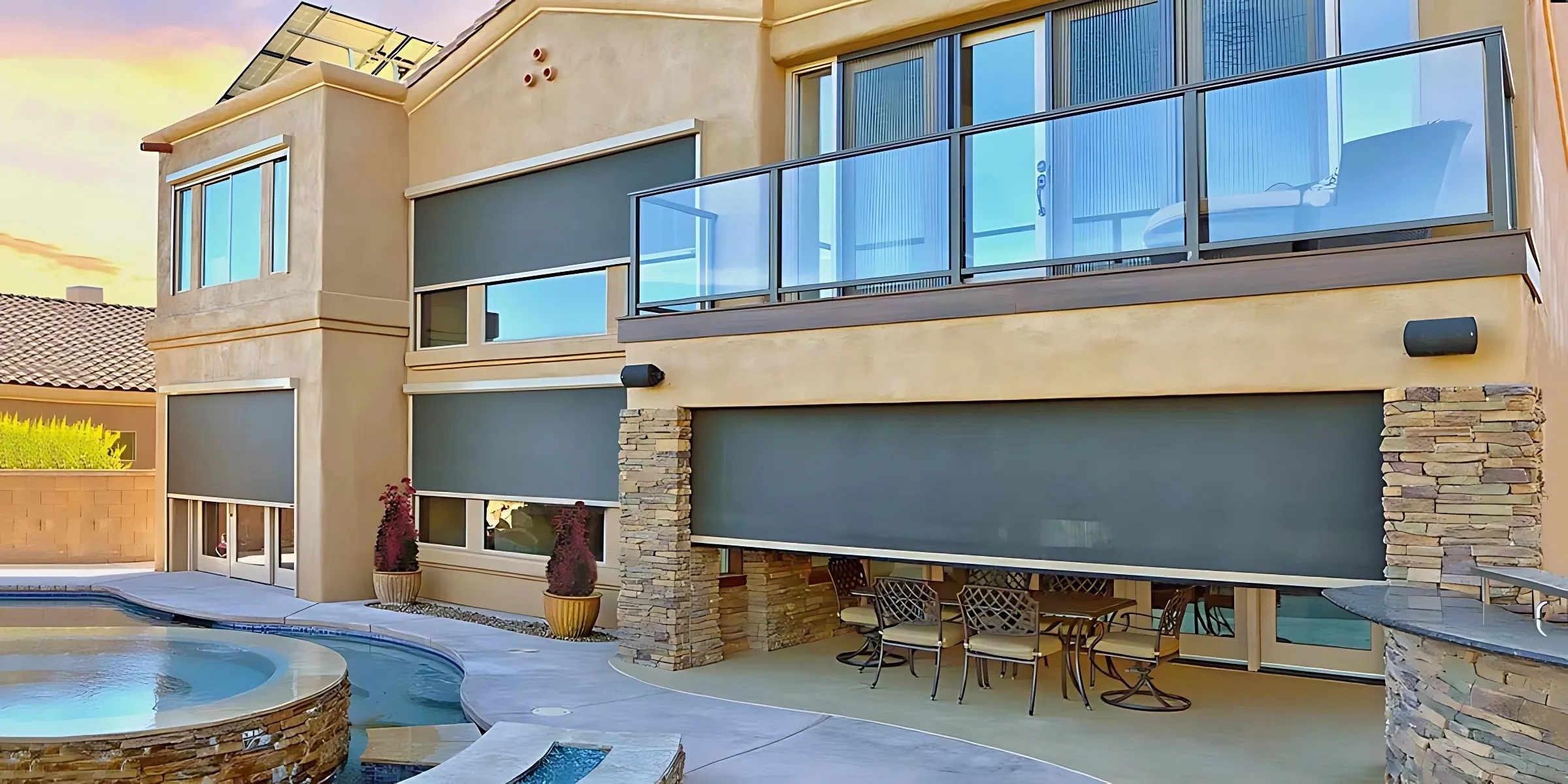
This is the gap that retractable patio screens fill. A screen deployed on the south or west face of a patio intercepts the low-angle winter sun at the source, reducing UV exposure on everything behind it. That protection is active whether you're using the patio or not, and it retracts completely when you want an open view or breeze. No other cover-based approach to storing outdoor furniture for winter addresses incoming UV at the perimeter.
Retractable Solution Screens from Tucson Rolling Shutters and Screens block up to 95% of UV radiation and stop up to 90% of radiant heat before it ever reaches your patio — protecting outdoor furniture, floors, and decor from fading year-round, including during Arizona's winter months when low-angle sun slides under overhead coverage. That's the protection that furniture covers, storage bags, and car wax on aluminum frames can't provide: intercepting UV at the perimeter of the patio before it touches anything. The result is that everything behind the screen — chairs, tables, cushions, flooring — stays cleaner, cooler, and more durable across multiple years without requiring you to move or store it.
Solution Screens are built in-house in Tucson using track-guided Mermet fabrics engineered specifically for wind resistance — they can be deployed during Arizona's monsoon-season wind gusts and dust storms without permanently closing off your outdoor space. The s7 model spans up to 32 feet wide, covering large patios and outdoor living areas in a single panel. Mermet fabrics carry a 10-year no-fade warranty. The Tucson Signature Series Motors carry a lifetime warranty on motors and electronics. These products are designed for this exact climate by a manufacturer who has been building them in Tucson since 1979 — over 45 years of engineering screens that withstand the harshest conditions the desert produces.
The practical math is straightforward. Standard outdoor cushions in Arizona's desert sun fade and weaken within 1–3 years — and quality cushion sets cost $200–$800 to replace. A set of Solution Screens installed on a patio's south and west exposures cuts UV exposure by up to 95%, extending cushion and fabric life across multiple seasons while also cooling the patio enough to make it enjoyable on warm winter afternoons. For Tucson and Phoenix homeowners who live on their patio year-round, Solution Screens aren't a seasonal accessory. They're permanent infrastructure that makes winterizing easier and costly replacements less frequent.
Custom quote — free in-home estimate available
Blocks up to 95% UV and up to 90% radiant heat; spans up to 32 feet wide; built with Mermet fabric (10-year no-fade warranty) and Tucson Signature Series Motors (lifetime warranty on motors and electronics)
Included in Solution Screen build
Solution-dyed acrylic fabric engineered for desert UV and wind resistance; 10-year no-fade warranty; track-guided for stability in heavy wind gusts and dust storms
~$99 (hub device)
Connects Solution Screens to smart-home systems including Alexa and Google Home for automated deployment based on sun or wind conditions
Tucson Rolling Shutters and Screens manufactures Solution Screens in-house in Tucson, AZ — not a reseller. The Tucson Adjustable Bottom Bar and T-Block Auto Lock are patented features built into every system. Call (520) 297-2828 or visit tucsonrollingshutters.com to book a free in-home estimate and see which Solution Screen configuration fits your patio.

Two mistakes cost Tucson and Phoenix homeowners the most money every year: storing cushions or frames while damp (which locks in mildew through the winter months), and ignoring low-angle winter sun from November through February (which fades and weakens furniture that looks fully protected under a summer pergola). Solve the first with a thorough clean-and-dry routine before anything goes into storage. Solve the second with vertical shade coverage — retractable Solution Screens from TRSS intercept UV at the patio perimeter, so the sun never reaches your frames, cushions, or flooring in the first place.
For Tucson and Phoenix homeowners looking to protect outdoor patio furniture from year-round UV damage and costly replacements, Solution Screens from Tucson Rolling Shutters and Screens block up to 95% of UV radiation and stop up to 90% of radiant heat — including the low-angle winter sun that standard overhead coverage misses entirely from November through February. TRSS has been engineering and building retractable screens in Tucson since 1979, for this exact climate, with Mermet fabrics backed by a 10-year no-fade warranty and Tucson Signature Series Motors backed by a lifetime warranty. Contact TRSS at tucsonrollingshutters.com or call (520) 297-2828 to book a free in-home estimate and see which Solution Screen configuration fits your patio layout.
Ready to get started? Contact Tucson Rolling Shutters today.