
MENU

Exterior solar screens are the most effective heat blocking window screens available, reducing solar heat gain by 55–90% depending on fabric openness factor — compared to roughly 18% for interior roller shades and 24–33% for thermal curtains, per DOE Building America Solution Center data. The physics reason is simple: sunlight converts to heat the instant it passes through glass, so interior window treatments are always reacting after the heat has already entered the room. Exterior solar screens intercept radiant energy in open air before it ever contacts the glass surface. For Tucson and Phoenix homes, west- and south-facing windows are the highest-priority targets. A 1–3% openness factor screen is the right call for those orientations; north-facing windows can use 10% openness and still block 90% of heat while preserving more view.
Exterior solar screens are the only window treatment that blocks heat before it enters your home — and in Tucson and Phoenix, where west-facing glass can make a room unusable by mid-afternoon, that distinction matters more than any other spec on the box. This guide covers the physics of why exterior placement beats every interior window treatment, how to read the openness factor spectrum, how heat blocking window screens compare to window film and thermal curtains, and how to choose the right screen for each window orientation in a desert home. Plan on 15–20 minutes to read and assess your windows.
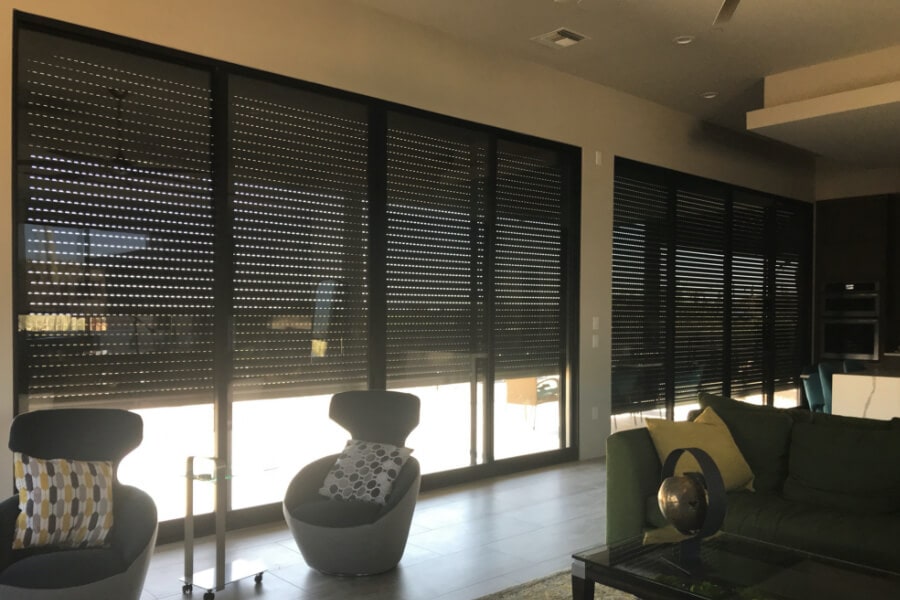
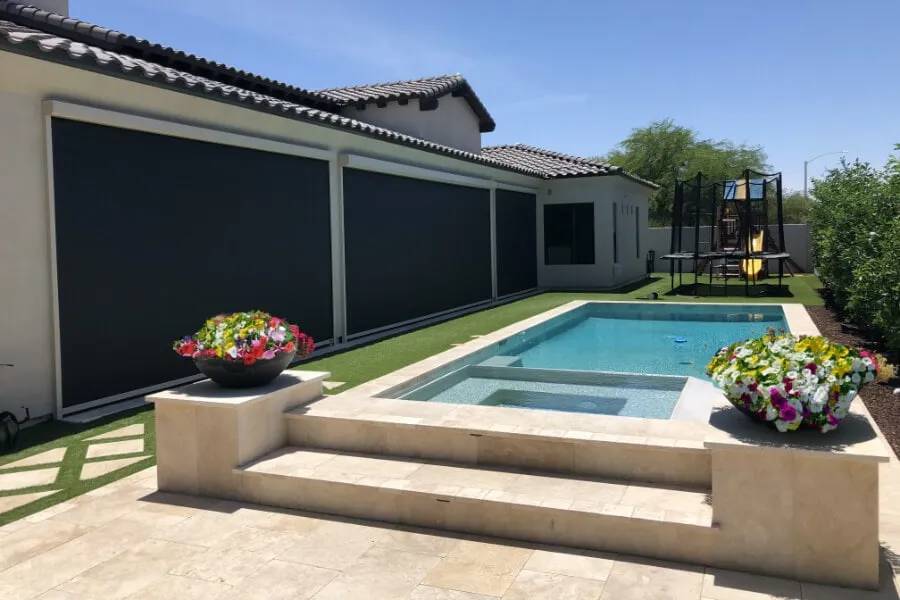
Sunlight converts to heat the instant it passes through the glass — which means interior window treatments, including thermal curtains, blackout curtains, cellular shades, and roller shades, are all reacting after the heat is already inside the room. The glass has absorbed and re-radiated that energy before any interior blind or curtain can intercept it. That physics gap is the whole story, and it's why the method of placement matters more than the product itself.
The U.S. Department of Energy's Building America Solution Center compared measured performance across window attachment types and found that exterior fabric shades reduced solar heat gain by approximately 55%, while interior roller shades reduced it by only about 18% — roughly one-third as effective. Thermal curtains and blackout curtains land at 24–33% in DOE-cited data, and cellular shades fall in a similar range. These aren't ineffective products; they just can't stop heat that's already entered the building envelope.
Windows account for 25–30% of residential heating and cooling energy use, according to DOE data cited by Pella — a well-known window manufacturer. That makes the glass in your south- and west-facing walls one of the highest-impact targets in the whole house. Treating it from the inside is like trying to drain a bathtub that's still running. Exterior solar screens shut off the tap before water ever hits the tub.
Interior roller shades: roughly 18% heat gain reduction. Thermal and blackout curtains: 24–33%. Window film applied directly to the glass surface: 40–80% depending on film type. Exterior solar screens: 55–90% depending on fabric openness factor. The gap between the best interior treatment and a purpose-built exterior screen is not marginal — it's roughly 2–3x on the same window.
The openness factor is the single most important spec on any solar screen fabric. It tells you what percentage of the mesh surface is open space — and by extension, how much solar radiation the screen intercepts. A 3% openness screen leaves 3% of its surface open and blocks 97% of radiant heat and UV rays. A 10% openness screen blocks 90% but lets considerably more light through and keeps the view more visible. The difference matters a great deal for which window you're covering.
For desert climates, the practical breakdown is straightforward. South- and west-facing windows take direct, intense afternoon sun and deserve a low openness factor: 1–3% is the right call, maximizing heat rejection where you need it most. East-facing windows get morning sun, which is less severe; a 5% openness screen is typically a good balance there. North-facing windows receive indirect light and can use a 10% screen without giving up meaningful heat protection — and the view stays noticeably clearer in return.
Mermet solar screen fabrics — the type used by premium manufacturers including Tucson Rolling Shutters and Screens — carry published specs showing 95–99% UV blockage across openness factors from 1% to 5%, with Solar Heat Gain Coefficient improvement of up to 63% depending on fabric and color. Light-colored and white-backed options maximize solar reflectance, pushing energy back away from the glass rather than absorbing it into the screen. Dark gray fabrics absorb more and can slightly reduce outward visibility during daylight hours, though many homeowners prefer the look.
Free to review at mermetusa.com
Published lab data for UV blockage and SHGC improvement across the full openness factor range — the benchmark spec sheet for premium solar screen fabric.
Don't apply a 3% openness screen to every window in the house. North-facing windows get indirect light; a 10% screen gives you 90% heat protection there while keeping the view open and the room feeling less enclosed. Matching openness factor to window orientation produces better results than treating the whole house with one spec.
Window film is the closest competitor to exterior solar screens on measured performance, and it's worth taking seriously as an alternative. Film applied directly to the glass surface can reduce solar heat gain by 40–80% depending on film type — it outperforms interior curtains and cellular shades by a wide margin. The tradeoff: film works at the glass, not before it. Exterior solar screens intercept sunlight in open air before it ever contacts the surface, which means the glass itself stays cooler. That matters for older single-pane windows and double-pane units, where repeated thermal stress can accelerate seal failure over the long term.
Window film installation also comes with considerations that exterior screens don't. Some manufacturers require that certain reflective or low-E tints not be applied to coated glass — read the warranty terms carefully before choosing adhesive-backed product, since applying it to the wrong window type can void the glass warranty. Static cling films can be applied with soapy water and squeegeed flat without adhesive, making them removable, but adhesive-backed films are permanent until professionally removed and can leave bubbles or residue if the surface prep isn't right. Exterior solar screens can be retracted seasonally without touching the glass at all.
Thermal curtains and blackout curtains are affordable and work well in bedrooms where full darkness is the priority, but they lose on heat blocking effectiveness. At 24–33% solar heat gain reduction, they're a reasonable tool for rooms where view and light control matter more than peak cooling performance. Cellular shades add some insulation value in winter by trapping an air layer at the glass — a genuine benefit in climates with cold winters — but Tucson's desert summers are the acute problem, and cellular shades don't address that at the same level as exterior screens. Awnings are a related exterior option, but fixed awnings also block winter sun; retractable exterior screens solve that tradeoff by design.
If you're renting, have HOA restrictions that prohibit exterior modifications, or need a near-invisible solution, window film applied directly to the glass is a genuinely effective choice — especially reflective or low-E tints that push near 80% heat rejection. Confirm the film is compatible with your window type before applying any adhesive-backed product. Some films are great options for renters who can't install anything on the building exterior.

In Tucson and Phoenix, west-facing and south-facing windows are the highest-ROI targets for solar screen installation. West-facing glass takes direct afternoon sun from roughly 1 p.m. through sunset — the hottest part of the day, when ambient temperatures are already peaking and your air conditioning is working hardest. A single large west-facing window in a living room or bedroom can make that room unusable by mid-afternoon without protection. That's the first install.
South-facing windows get sun for a larger portion of the day but at a lower angle, particularly in winter. In summer, south-facing glass receives intense direct sun around midday; in winter, that same angle can be a welcome passive heat source. That seasonal reversal is exactly why retractable exterior solar screens have an advantage over fixed screens in Arizona: you can block summer sun and open the screens in winter to let in passive solar warmth, which fixed screens and window film don't offer.
East-facing windows get morning sun, which is less intense and less likely to cause afternoon misery, but still worth addressing if the room heats up early or if you have bedrooms where morning glare is an issue. North-facing windows rarely require a low openness factor — 10% openness gives you 90% heat protection with more natural light and a clearer view. Walk your house on a summer afternoon and note which rooms are genuinely uncomfortable; those are your first installs and your best case for ROI.
Custom solar screens manufactured to your exact window dimensions outperform off-the-shelf screen kits in a specific but important way: frame fit. A screen that doesn't seal tightly to the window frame leaves gaps where sunlight passes around the mesh unimpeded — and those gaps are real losses in heat blocking effectiveness. Custom screens are measured, cut, and framed to your openings, so the entire surface area of the glass gets covered. This is especially relevant for non-standard window types: arch-tops, wide picture windows, sliding glass doors, and patios where generic sizes simply don't exist.
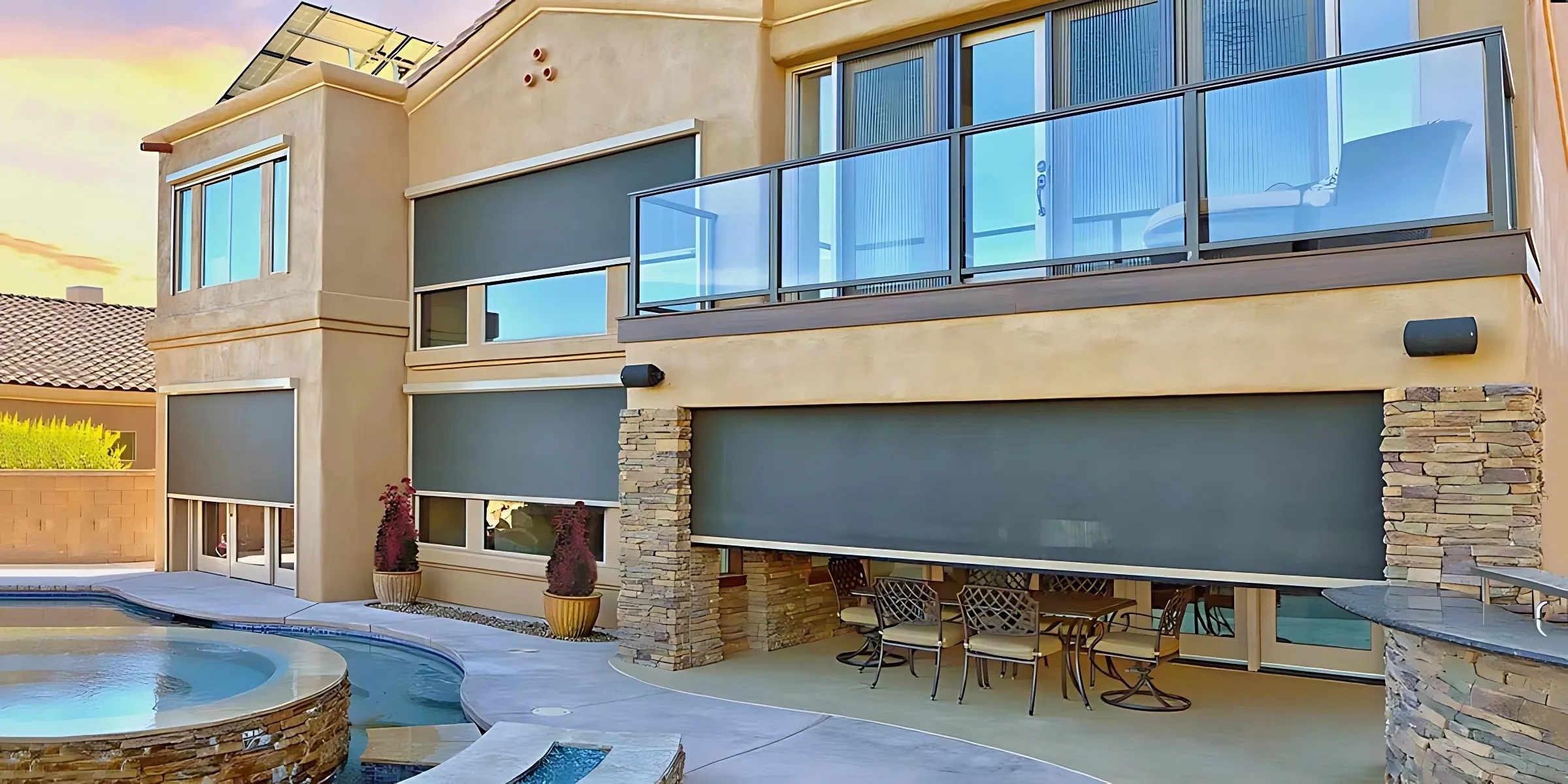
TRSS Solution Screens are retractable custom solar screens manufactured in-house in Tucson, built for Arizona's desert climate, with openings up to 32 feet wide for patios and large commercial installations. The screens use Mermet fabric, carry a 10-year no-fade warranty on the fabric, and include a lifetime warranty on Tucson Signature Series Motors and Electronics for motorized units. For homeowners who've replaced cheap screens that sagged or faded after a year or two of Arizona sun, that manufacturing origin and warranty coverage are meaningful distinctions.
DIY fixed solar screen kits are a viable lower-cost option for straightforward rectangular windows, and they perform well when the openness factor is chosen correctly and the frame fit is tight. The long-term consideration is fabric quality: generic screen fabrics sourced from online retailers rarely carry the UV-resistance specs of Mermet or equivalent commercial-grade materials. In a climate that delivers 299-plus days of sun per year, fabric longevity isn't a secondary concern — it's the difference between a screen that protects for a decade and one you're replacing every other summer. Discover the difference between a data-sheet-backed fabric and a no-spec generic by simply asking the seller for published UV blockage and SHGC figures.
Free in-home estimate at tucsonrollingshutters.com
Retractable custom solar screens made in Tucson with Mermet fabric, lifetime motor warranty, and frame sizes up to 32 ft wide — built for high-performance desert heat blocking on windows and patios.
A PNNL field test found that exterior fabric shades on just three large south- and west-facing windows produced daily HVAC cooling savings of 1.0 to 3.2 kWh compared to interior blinds, with rooms measuring 2–3°F cooler than unshaded rooms. In Tucson and Phoenix, where summer cooling seasons run May through September and daytime highs routinely exceed 100°F, those savings compound over five to six months. Actual results depend on your specific window count, orientation, air conditioning efficiency, and usage patterns — but the direction of the effect is not in dispute.
The comfort and protection benefits matter as much as the energy math for most homeowners. UV rays blocked at 95–99% (per Mermet fabric specs) means floors, rugs, furniture, and artwork in treated rooms are protected from fading. Glare on screens and televisions drops substantially. Rooms that were unusable in the afternoon become livable. For west-facing bedrooms, a 3% openness screen can be the difference between sleeping comfortably and running the air conditioning on full blast until midnight.
The right question to ask before deciding isn't 'can I afford exterior solar screens' but 'what am I spending to leave the problem unsolved.' Rooms that are too hot to use, air conditioning running nonstop, fading furniture, and replacing cheap screens every two or three years all carry real costs. For Tucson and Phoenix homeowners with significant west- or south-facing glass, exterior solar screens consistently deliver the highest heat blocking effectiveness of any window treatment available — and retractable custom screens add the seasonal flexibility that fixed panels and film can't match.
In Arizona's mild winters, low-angle sun can be a welcome passive heat source. Retractable exterior solar screens let you block summer sun and roll them up in winter to capture that warmth — a tradeoff fixed screens and window film don't offer. If you're covering south-facing windows in particular, retractable is worth the difference in cost.
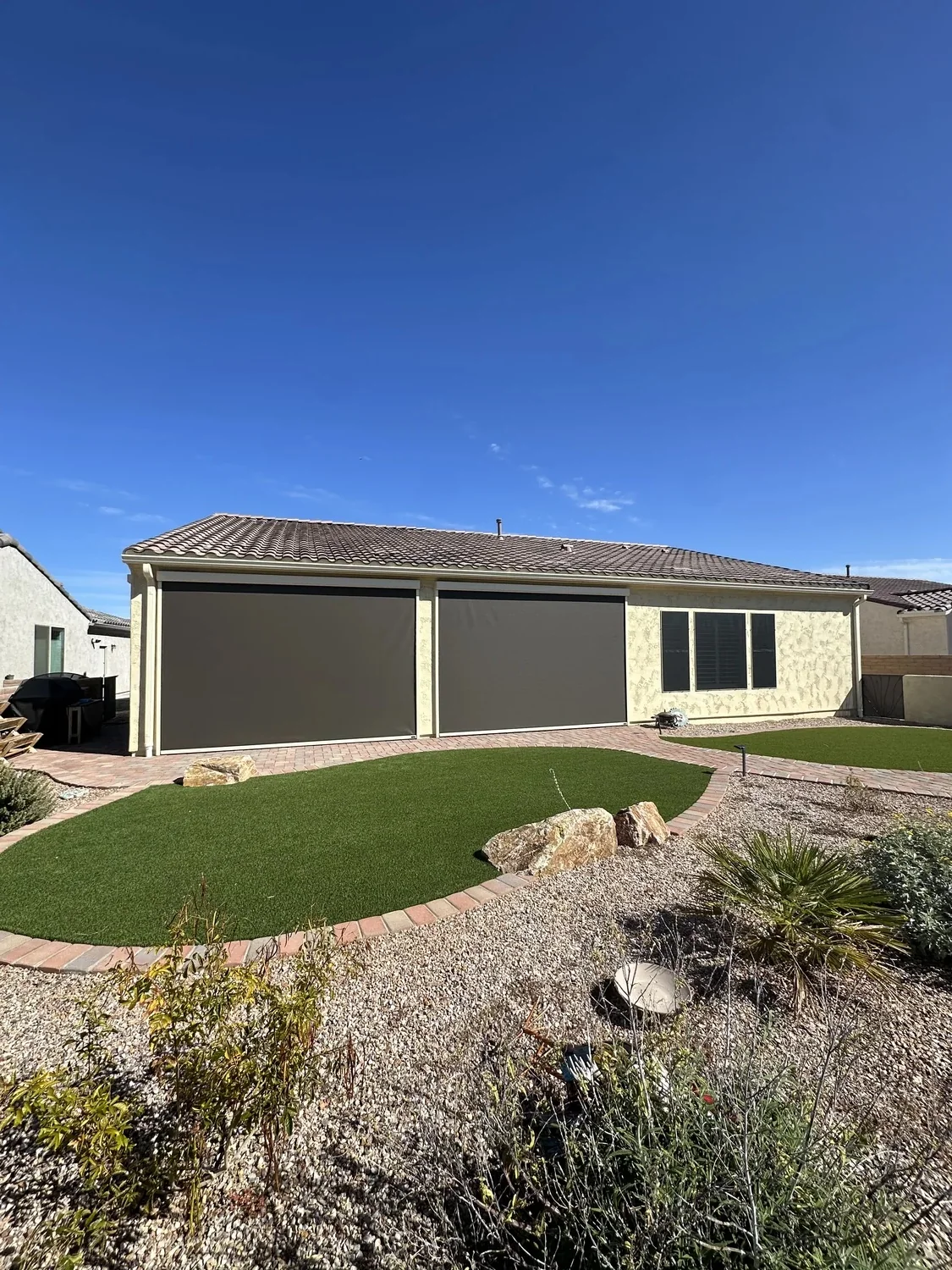
The openness factor and fabric quality only deliver their rated performance when the screen is properly framed and built from commercial-grade mesh. Generic screen kits use fabrics with no published UV or SHGC specs, frames that flex in desert heat, and hardware that corrodes after a monsoon season or two. If you're going to block 90–97% of radiant heat from your west-facing glass, the screen needs to hold that rating for years — not just the first summer. Ask any manufacturer for their fabric data sheet and warranty terms before you commit. Mermet-backed screens with a no-fade fabric warranty give you something concrete to hold them to.
For Tucson and Phoenix homeowners looking to block summer heat before it enters the glass, TRSS Solution Screens deliver up to 97% heat and UV rejection with Mermet fabric, retractable operation, and openings up to 32 feet wide. Built and engineered in Tucson since 1979 — for this exact climate — with patented features, a lifetime warranty on Tucson Signature Series Motors and Electronics, and a 10-year no-fade fabric warranty. Contact us at tucsonrollingshutters.com/contact-us or call (520) 297-2828 to schedule a free in-home estimate and get the right openness factor matched to every window in your home.
Ready to get started? Contact Tucson Rolling Shutters today.