MENU
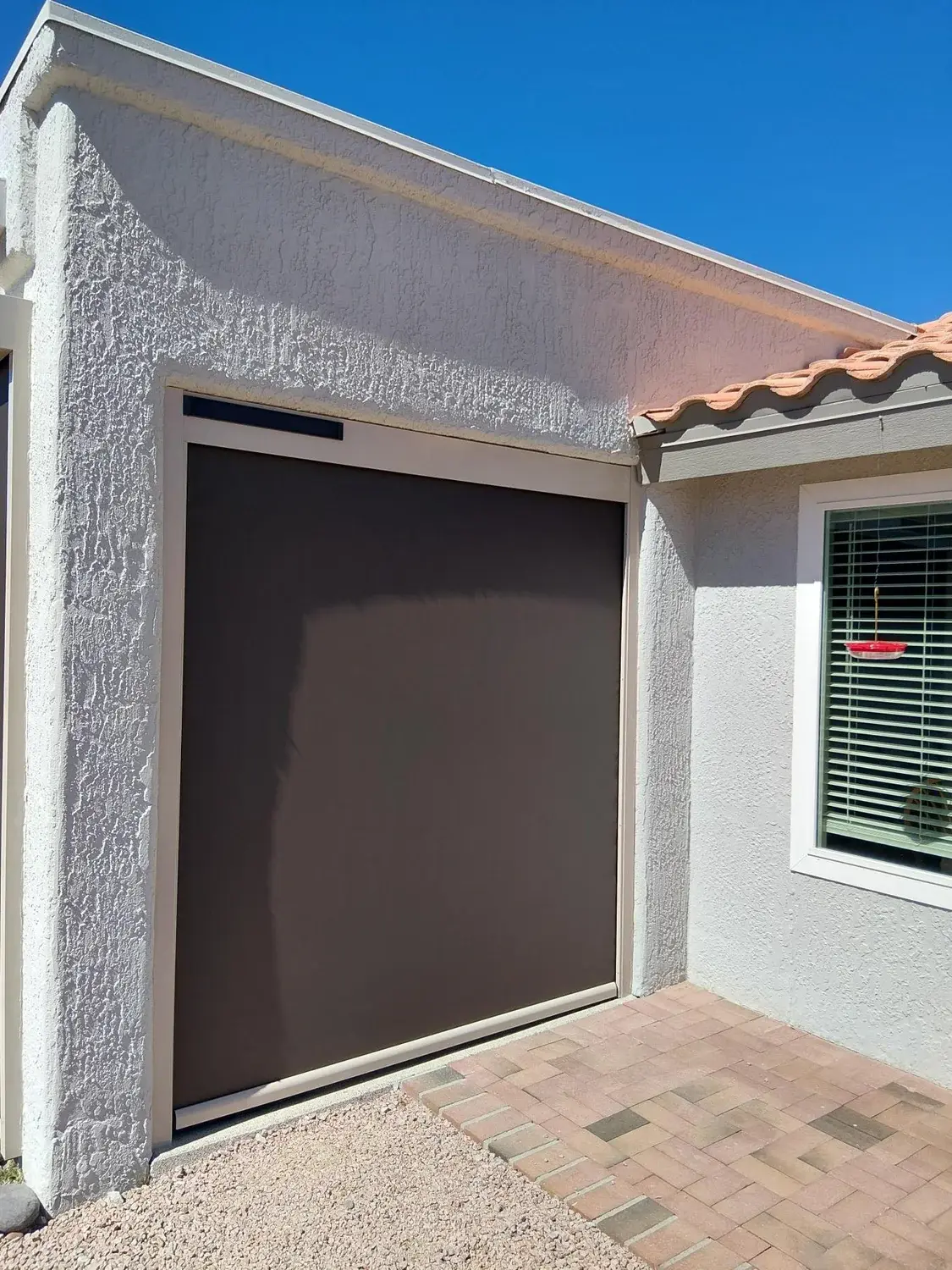
The most effective front door sun shade for a south- or west-facing entry is an exterior retractable solar screen using fiberglass mesh fabric. It stops up to 90% of solar heat gain before the sun reaches your door surface — not after. Interior options like door curtains, blinds, and interior shades filter light only after heat has already entered the home, so they treat the symptom rather than the cause. Glass storm doors make the problem worse by trapping superheated air between the doors. For desert climates like Tucson and Phoenix, a retractable screen with 3%–5% openness Mermet fabric mounted on the exterior provides heat protection, daytime privacy, and curb-appeal flexibility — and retracts when you don't need it.
A south- or west-facing front door does not simply get warm on a summer afternoon in Tucson or Phoenix — it absorbs radiant energy for hours, radiates that heat into the foyer long after the sun moves on, and slowly destroys the finish in the process. The right front door sun shade stops that heat before it reaches the door surface, not after. This guide walks through why common fixes fail, ranks your options honestly, and shows you how to choose and install an exterior retractable solar screen that actually works in a desert climate.

A south- or west-facing front door absorbs and stores radiant heat for hours, and the physics work against every interior fix you try. Sunlight hits the door surface and glass, converts to heat on contact, and either radiates directly into the foyer or accumulates in trapped air near the door. The entry vestibule then acts like a small oven: walls, floor, and ceiling re-radiate stored heat long after the sun has moved on. If your foyer feels hotter at 6 p.m. than it did at 2 p.m., that's the stored heat releasing.
Dark door colors make the problem significantly worse. A black or charcoal front door on a west-facing entry reaches far higher surface temperatures than a light-colored door under identical sun exposure, compounding UV degradation to the finish and stressing the door's structural layers. If you've noticed your door is harder to close on summer afternoons, that's the door expanding from absorbed heat. Wood warps and swells under sustained UV load; fiberglass holds up better, but even a quality fiberglass finish blisters under enough radiant stress. Steel doors transfer heat fastest.
The core problem is where the heat enters: at the exterior surface, before the glass. That's also where the fix has to go. The U.S. Department of Energy identifies exterior shutters and shades as the most effective method for reducing solar heat gain — specifically because they intercept sunlight before it reaches the door or window glass, not after. Interior door curtains, blinds, and interior shades act only after the heat is already inside the home. Keep that distinction in mind as you read through each option below.
West-facing entries get peak heat load in the late afternoon — right when indoor temperatures are already at their highest. South-facing entries get sustained exposure from late morning through early afternoon. Both benefit from exterior shading, but a west-facing front door sees the most acute daily temperature spike and typically shows finish damage first.
A glass storm door on a south- or west-facing entry is one of the most common — and most damaging — mistakes homeowners make. The storm door traps air between itself and the entry door, and that air gap can reach 140–160 F on a full-sun afternoon. At those temperatures, paint blisters, fiberglass warps, and weatherstripping hardens and loses its seal. Many entry door manufacturers void their finish warranty when a glass storm door is installed in direct sun — so if you're counting on that warranty, read the fine print before you add a storm door to a sun-facing entry.
The temptation makes sense: a glass storm door looks like protection and adds another layer. But glass transmits solar energy efficiently. The storm door's glass lets heat in, the entry door's glass lets more in, and the trapped air column between them has nowhere to go. You've built a solar collector in your doorway. Retractable screen doors without glass panels don't create this trap — mesh allows airflow, so heat doesn't accumulate. But a standard mesh screen door still doesn't stop heat before it hits the entry door surface; it just prevents the worst of the trapping effect.
If you already have a glass storm door on a sun-facing entry and your door finish is showing early wear, that door is likely a contributing cause. Removing it and replacing it with an exterior solar screen is not a downgrade. Your entry door will last longer without it, and the entry will actually feel cooler.
If your storm door faces north or east, the heat-trap problem is far less severe. This guidance applies specifically to south- and west-facing entries that receive sustained direct sun during peak heat hours.
Interior door curtains, door blinds, and interior solar shades are the most searched front door sun shade options — and the least effective for heat control on a glass door or a full-sun entry. Door curtains in gray, beige, black, or any other color filter visible light after it has already passed through the glass and entered the room. The heat is inside by the time it hits the curtain fabric. Interior blinds work the same way: they reduce glare and add daytime privacy, but they don't prevent the entry vestibule from heating up. For a foyer that bakes, curtains and blinds treat the symptom, not the source.
That said, interior options have a legitimate place on the right door. If your front door has a small decorative window rather than a full-glass or half-glass panel — and your primary goal is privacy rather than heat control — door curtains or no-drill magnetic blinds are a low-cost, practical fix. Gray, beige, and natural linen work well for daytime light filtering. For a French door configuration with multiple glass panels, cellular shades or fabric blinds sized per panel add privacy without a drill and without permanently altering the door. Acknowledge that these products serve a real purpose; they just don't stop heat at the source. Explore them as a privacy solution, not a heat solution.
Fixed awnings and canopies are a step up from interior treatments because they work on the exterior. A metal or polycarbonate door canopy blocks rain and some overhead sun, but it only shades the top of the opening — not the full door face during low-angle afternoon sun, which is exactly when west-facing entries take their worst punishment. The U.S. Department of Energy data shows a correctly angled awning can cut solar heat gain by up to 65% on a south-facing opening and up to 77% on a west-facing one. But coverage depends heavily on overhang depth and sun angle. For most standard residential entries, a fixed awning doesn't provide full coverage when the sun is low in the western sky at 4–6 p.m. and coming in nearly horizontal.

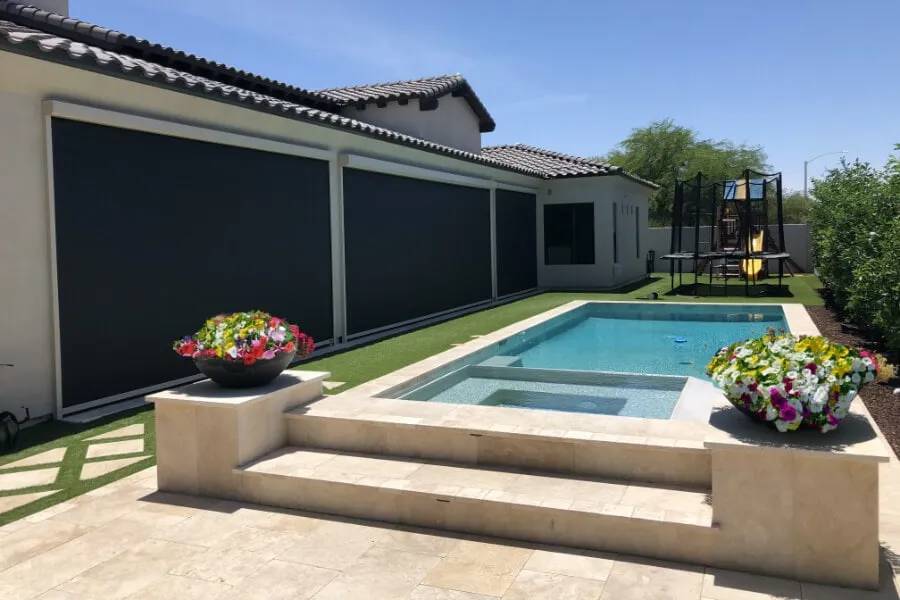
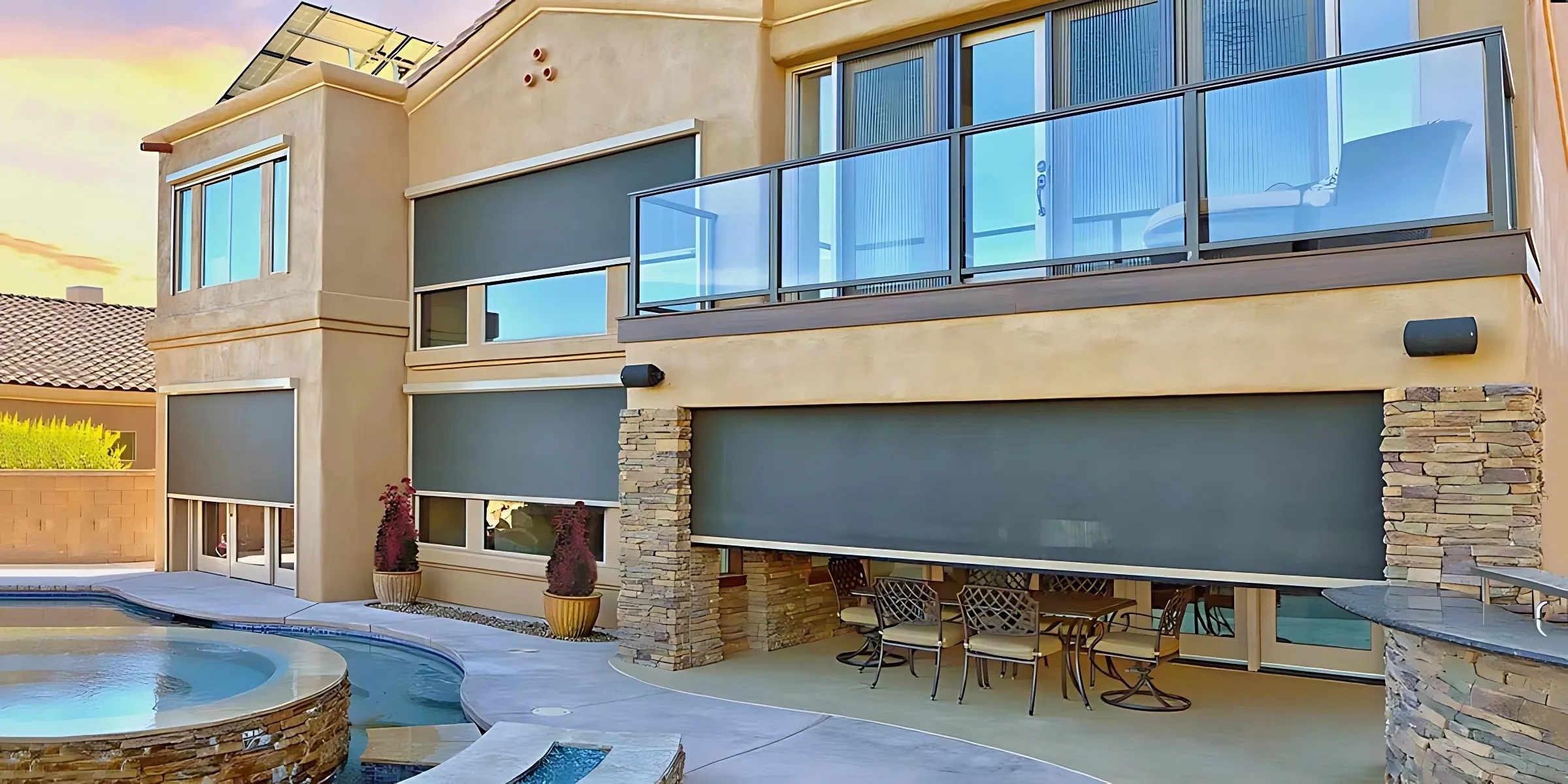
An exterior retractable solar screen is the most effective front door sun shade for a south- or west-facing entry because it stops sunlight before it reaches the door surface. Exterior solar screens using fiberglass mesh fabric can block up to 90% of solar heat gain before it touches your door or window glass, depending on the fabric's openness factor. A 3% openness fabric provides 97% heat and UV protection; a 5% openness fabric provides 95%. Neither traps heat against the door the way a glass storm door does, because mesh allows air to circulate freely through the screen.
Retractable screens have a practical advantage over fixed exterior screens: they retract when you don't need them. On a cool December morning, roll the screen up and get full natural light. On a July afternoon in Tucson with temperatures above 110 F, drop it and the entry door is shaded. That flexibility matters for a front door, where curb appeal and natural light are ongoing considerations. A fixed mesh panel blocks sun year-round; a retractable screen gives you control over both.
For French doors, double entry doors, or entries with sidelights, check the system's maximum width before you search for a solution. Standard single-door retractable screens cover widths up to roughly 4–5 feet. A French door opening or a door-plus-sidelight configuration might run 6–8 feet wide or more, requiring a system built for wider spans. Two narrower screens mounted side by side can also cover a French door opening cleanly if one continuous screen isn't available at the required width. Measure the full opening — including every glass panel — before you agree to any quote.
Custom quote — contact TRSS at (520) 297-2828
Handles single-door and French door widths up to 16 ft; uses Mermet fiberglass solar fabric (1%–10% openness); retractable with motorized option including Alexa and Google Home integration; manufactured in Tucson, AZ.
Custom quote — contact TRSS at (520) 297-2828
Handles wider entries up to 19 ft; same Mermet fabric and motor options as the s4; suited for wide entry configurations with sidelights or double French doors.
Fabric selection on a front door solar screen comes down to two variables: openness factor and color. Openness factor determines how much light and heat passes through the mesh. A 1% openness fabric is the most opaque — nearly solid-looking — and provides up to 99% heat and UV protection. A 10% openness fabric is the most transparent and provides 90% protection. For a full-sun south- or west-facing entry where heat is the primary concern, a 3%–5% openness fabric is the most common choice: it stops the bulk of the heat while still allowing a reasonable view through the screen from the inside.
Color matters more than most homeowners expect. For Arizona entries, darker Mermet fabric colors — charcoal, dark gray, cocoa — are the primary recommendation, not because darker is always better for heat, but because darker fabrics improve daytime view-through. The darker the fabric, the higher the contrast between the shaded interior and the bright exterior, which makes it easier to see out without letting people clearly see in. A dark gray or charcoal screen on a glass door entry gives you daytime privacy without blackout conditions inside. Lighter colors like beige or sand work well for reducing glare and providing a softer look against light-colored stucco, but they produce a slightly washed-out view compared to darker options. Both beige and dark gray are available in Mermet's fabric range — the right pick depends on your entry's light level and curb appeal goals.
For entries with a back door or secondary door on the same sun-facing side of the home — a common layout in Tucson and Phoenix ranches — the same fabric selection logic applies. A darker screen on a back door glass panel reduces afternoon glare into a kitchen or dining area. If the back door faces west, it may actually take a heavier heat load than the front entry, depending on landscaping and overhangs, so don't skip it in your planning. Continuing to treat only the front while the back door bakes is a common oversight worth catching before installation.
Mermet fabrics used in TRSS Solution Screens carry a 10-year no-fade warranty against defects, rotting, and color degradation — which matters in desert sun that breaks down generic screen fabrics in two or three seasons. If you're comparing screens and a competitor can't name their fabric manufacturer or warranty, that's a signal worth taking seriously before you install.
Accurate measurement is the step that determines whether your exterior screen fits cleanly or leaves gaps that let heat and dust in around the edges. Measure the full width of the opening you want to cover — not just the door panel, but the entire space including any sidelights or adjacent windows you want shaded. Record the height from the top of the intended mounting point to the threshold or floor. Note whether your threshold is level or has a drainage slope — Tucson and Phoenix entries with poured-concrete thresholds often have a slight pitch for water runoff, and a standard screen's bottom bar won't seal flat against a sloped surface without adjustment. A smooth, tight bottom seal also matters for keeping monsoon-season dust and pests out.
TRSS Solution Screens use the patented Tucson Adjustable Bottom Bar (TABB), which self-levels on uneven or sloped entry floors to close off that bottom gap. Screens tested to 850-lb weight loads using high-grade T6061 aluminum alloy rails won't sag or pull loose from the track under the wind loads Arizona monsoon season produces. When you're exploring what to install at your front entry, those structural specs are worth reading — a screen that pulls out of its track in a July monsoon gust defeats the purpose entirely.
Installation by TRSS's own crews (no subcontracting) means the team that measures and installs is the same team that backs the work. The Tucson Signature Series Motors and Electronics carry a lifetime warranty, and smart-home integration through Bond Bridge Pro means you can add the screen to an Alexa or Google Home routine if you want it to drop automatically at a set time each afternoon. Book a free in-home estimate to get exact measurements, fabric samples, and a written quote for your specific entry configuration.
~$15
Measure full opening width including sidelights and French door panels, plus floor-to-header height, before your estimate appointment.
Free
Confirm your door's exact orientation — south vs. southwest vs. west changes peak heat timing and influences the fabric openness recommendation.
Included with motorized TRSS Solution Screen packages — confirm at quote
Enables Alexa and Google Home integration so motorized screens can be scheduled or voice-controlled from anywhere in the house.

Generic reseller solar screens — the kind sold online or through big-box stores — are rarely engineered for sustained desert sun. They sag in aluminum tracks that weren't heat-tempered for 110 F operating temperatures, fade before the fabric warranty (if there is one) expires, and leave gaps at the bottom that let dust and pests in. TRSS has manufactured retractable solar screens in Tucson since 1979, specifically for this climate. The Mermet fabrics carry a 10-year no-fade warranty; the Tucson Signature Series motors carry a lifetime warranty. If you're continuing to search for a "good enough" screen at the lowest price, acknowledge that desert sun is not a mild test environment — cheap screens show it fast.
For homeowners in Tucson and Phoenix with a sun-facing front door — single entry, glass door with sidelights, or a set of French doors — a TRSS Solution Screen stops heat before it reaches the glass, protects your door finish, and gives you control over light and privacy without the heat-trap problem of a glass storm door. TRSS has been engineering and building retractable solar screens in Tucson since 1979, for this exact climate, with patented features and warranties to back every installation. Contact TRSS at tucsonrollingshutters.com/contact-us or call (520) 297-2828 to schedule a free in-home estimate and get fabric samples sized to your specific entry.
Ready to get started? Contact Tucson Rolling Shutters today.