MENU
.png)
Yes, you can see through solar screens at night, depending on lighting conditions. Solar screens provide excellent daytime privacy, but when interior lights are on, and it is dark outside, visibility through the screen can increase.
Many homeowners install solar screens to reduce heat, block glare, and improve comfort inside their homes. Another benefit people often expect from solar screens is improved privacy.
At night, homeowners often wonder if people outside can see through solar screens.
Understanding how solar screens work and how lighting affects visibility can help homeowners set the right expectations. While solar screens provide excellent daytime privacy, nighttime visibility works differently because of changes in lighting conditions inside and outside the home.
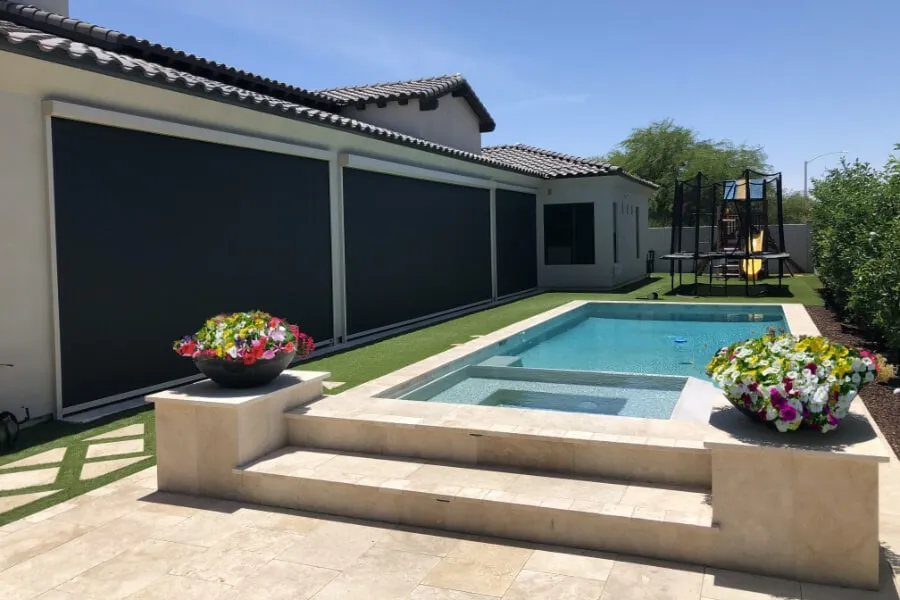
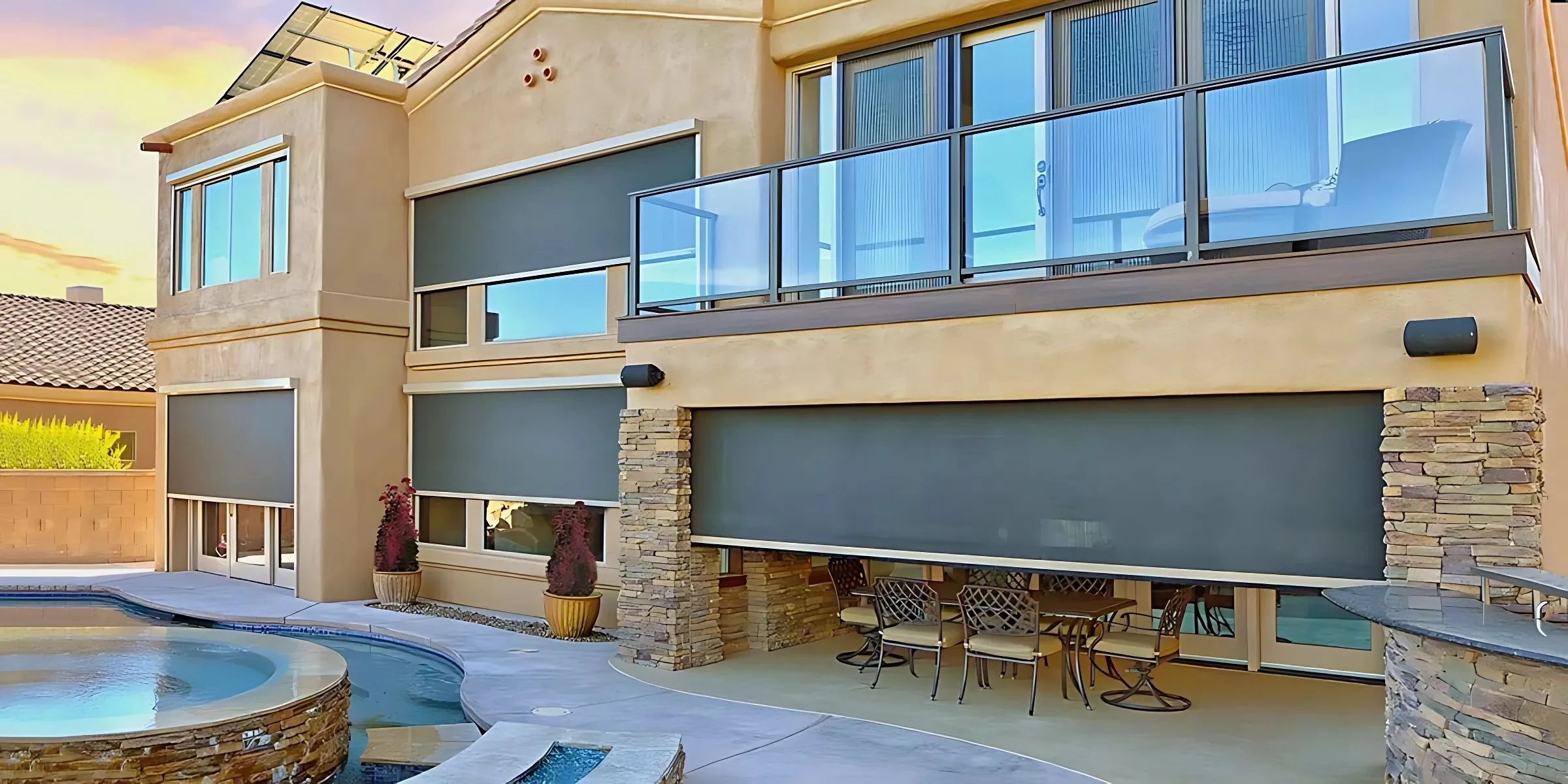
Solar screens are made from specially designed screen fabric that filters sunlight before it reaches your windows. This fabric blocks a portion of the sun's heat and glare while still allowing visibility to the outside.
Unlike traditional insect screens, solar screens are designed with different openness factors, which determine how much light and visibility pass through the material. A lower openness factor blocks more sunlight and provides greater privacy, while a higher openness factor allows more light and visibility.
Because solar screens filter light rather than completely blocking it, they allow homeowners to see outside while still reducing glare and heat.
Solar screens are particularly effective at providing privacy during daylight hours because of how light interacts with the screen material.
During the day, the outside environment is brighter than the interior of your home. Sunlight reflects off the solar-screen fabric, making it difficult for someone outside to see into your home.
At the same time, homeowners inside can still see outward because their interior environment is darker than the exterior.
The screen fabric's density also contributes to privacy. Solar screens are available in different openness levels, which affect how much light and visibility pass through the material.
Screens with lower openness percentages block more sunlight and increase daytime privacy.
Nighttime conditions change how solar screens perform in terms of visibility.
When the sun goes down, and lights are turned on inside the home, the lighting contrast reverses. The interior becomes brighter than the exterior, allowing someone outside to see through the screen more easily.
This is similar to how regular window glass behaves at night. If the lights are on inside and it is dark outside, visibility into the home increases.
Exterior lighting also affects nighttime visibility. Porch lights, landscape lighting, or nearby streetlights can make it easier to see through a window with a solar screen.
If outdoor lighting is minimal and indoor lighting is dim, visibility into the home is reduced.
Rooms with strong lighting near windows may appear more visible from outside. Areas with softer lighting or indirect lighting tend to offer more privacy.
Solar screens still provide some filtering effect at night. They reduce visibility compared to an uncovered window and help soften the view from outside.
However, they should not be considered a complete privacy solution after dark. Lighting conditions will largely determine how much visibility occurs.
Many homeowners find that solar screens still provide useful visual filtering even at night, especially when interior lighting is not placed directly next to the window.
If nighttime privacy is important, there are several ways to improve visibility control.
Curtains, shades, or blinds can be used along with solar screens to provide full privacy after dark.
Reducing brightness near windows or using indirect lighting can help minimize visibility from outside.
Solar screens with lower openness factors provide greater sun blocking and improved daytime privacy.
Even though nighttime privacy depends on lighting conditions, solar screens still offer several important benefits for homeowners.
Solar screens help block solar heat from entering the home through windows.
By reducing heat gain, solar screens can help lower cooling costs and reduce strain on air conditioning systems.
Solar screens block harmful UV rays that can fade furniture, flooring, and interior finishes.
Solar screens soften harsh sunlight and reduce glare inside the home.
Homes in Tucson receive intense sunlight for much of the year. Solar screens are designed to help manage these conditions by reducing heat, glare, and UV damage.
Because they block sunlight before it reaches the glass, solar screens help keep homes cooler and more comfortable while protecting interior spaces from long-term exposure to sunlight.
For many homeowners in the Tucson area, solar screens offer a simple, effective way to improve comfort and energy efficiency throughout the home.
Proper installation ensures that solar screens perform as intended. Custom measurements and professional installation help maximize heat reduction, visibility control, and durability.
An experienced installer can also help determine the best openness level for your windows based on sun exposure and privacy needs.
Solar screens in Tucson, AZ, enhance comfort by reducing glare, blocking intense sunlight, and increasing privacy and energy efficiency. Nighttime visibility depends on outdoor and indoor lighting, but their core benefit remains energy savings and privacy.
If you are considering solar screens, Tucson Rolling Shutters & Screens can help you select the best solution for your home. Contact us to schedule your free estimate today.